

We the People of…
Kinship: Sky Islands

Kinship: Sky Islands


The aspens flutter
In quiet applause,
As if your journey into nature
Deserves its own ovation.

Welcome home.

Rivers of green and white and gold
Rush down to meet you
As a hundred birds dart away,
Flickering into the periphery
In their startled excitement
At your return.

But then,
Suddenly,
Once you are really here,
Sitting quietly within the landscape,
Gently upon the moss and lichen,
Fallen leaves and stones,
The birds flit their way
Back to the branches overhead.
Squirrels come to make sure it is really you.
The trees and rustling grasses murmur their acceptance.
And now that your kinship is confirmed,
The ground swells up to meet you
Softly
In embrace.
Yesterday I was driving home after a therapy appointment and saw something so beautiful I had to stop the car to get out and take a photo.
What was this wondrous sight? Just the mountains, golden in the light of the setting sun, the stately saguaros and tangled desert brush standing in shadow like a desert seabed lain around the peaks, which rise from the desert floor like islands. Here in the Sonoran Desert, we actually call the mountains “sky islands” because even here in this dry and arid land, the mountaintops get much more water, and so they are covered in thick forests full of bears, wild turkeys, mountain lions, and all the other flora and fauna of a lush landscape. In moments like these, where the sun hits them just right, the “sky islands” nickname takes on a whole new meaning.
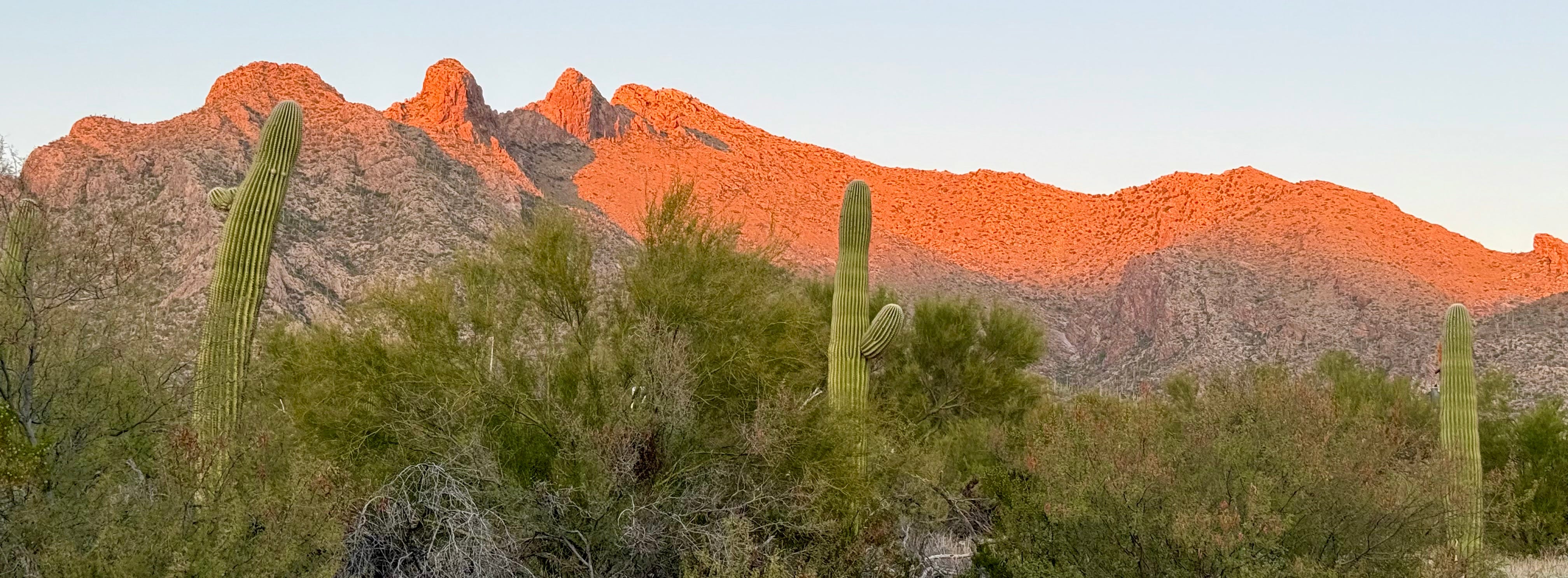
I’m coming up on thirty years of living here, and I am so grateful that the beauty of this place can still stop me in my tracks. Just before Thanksgiving my cousin’s son died after a long struggle with addiction and mental illness, and then two weeks later my uncle died from complications of alcoholism. This, along with a few other developments has cast my family into chaos, and some members of the family are dealing with it all by reverting to cruelty. Addiction isn’t the only affliction within the dysfunctional family systems of addicts, and the collateral damage is often just as harmful as the disease of addiction itself.
Thank God for therapists.
And thank God for the mountains on that drive home. As much as I feel like an outsider in my own family, I’ve been utterly surrounded by constant reminders that Tucson is where I belong. I keep running into old friends, keep being struck with awe at the family of hawks living in my front yard, keep finding nature proving its insane resiliency, honed into sharp survival skills by the harshness of the desert. The late autumn light is hitting the prisms in my windows again, filling my house with thousands of tiny rainbows. After a brutal summer, the roses all over my neighborhood have come back, so that entire stretches of the sidewalk smell like perfume. Sensing my cyclones of shifting emotions — grief, anger, outrage, despondency, serenity, gratitude, joy, hope, then grief again — with each new feeling my husband and cats curl up with me on the couch and bring me back to stability, warmth, and steady comfort. Everything, everything, everything keeps reminding me that I am home. That I belong here.
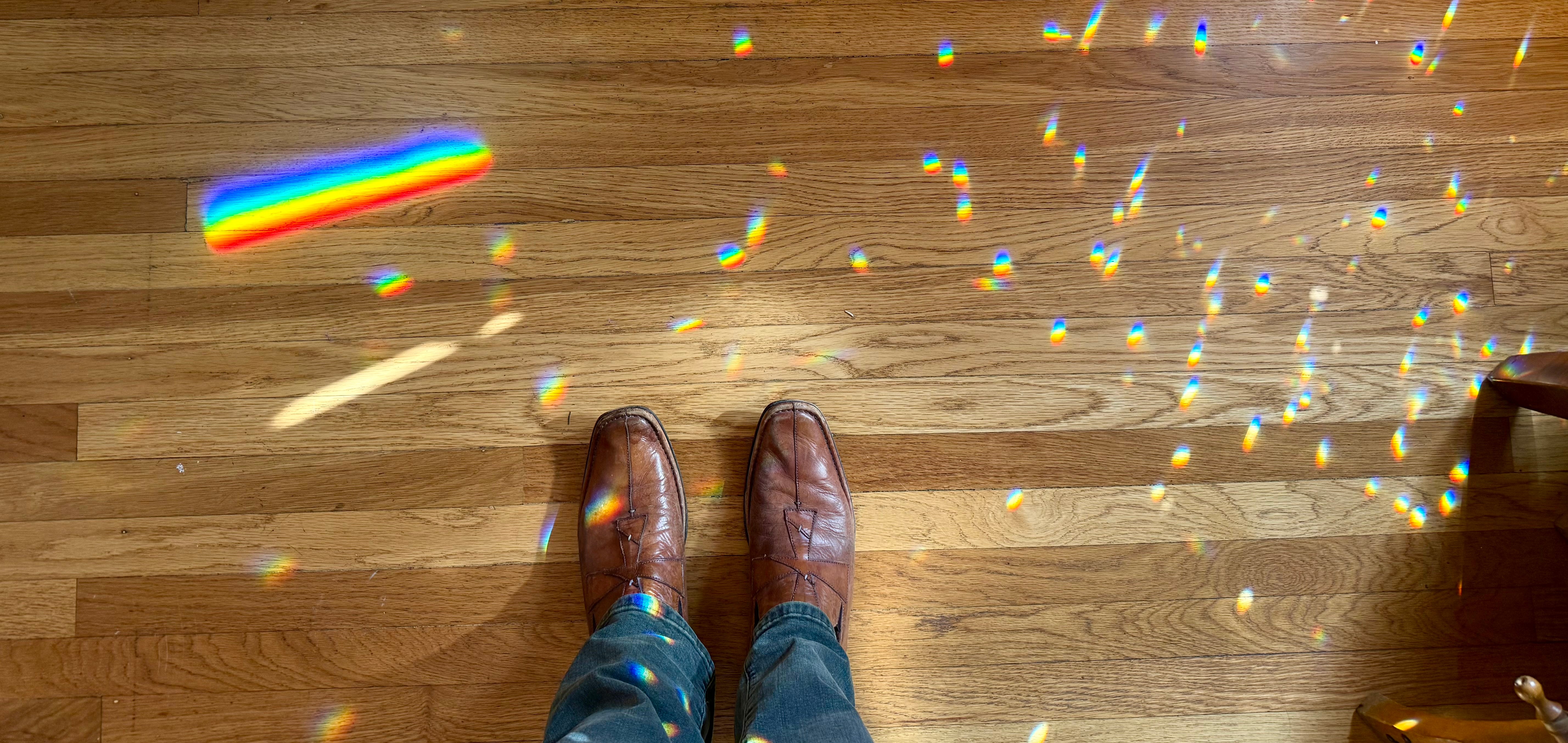
That sense of belonging has been such a balm to my spirit after a difficult season, and it stands in stark contrast to my childhood in Florida, where I just never felt at home anywhere except in the woods behind the trailer park where I grew up.
Now, nearly everywhere I look I can sense all the things that make a place feel like home: the habitual reaching for the bathroom light switch; the secret parking spots; trees I’ve watched grow for decades; the hiking trails I know like lifelong friends; the local businesses I’ve grown to love; the way the light shifts in now-predictable patterns; driving almost by muscle memory; heirlooms and sentimental objects in every room of my house; my involvement in local politics and issues; the feeling of safety almost anywhere I go; seeing one of my favorite pieces from the art museum’s permanent collection come out of hibernation once every few years, and all the relationships, from my closest friends to people I hardly ever see, like my optometrist who asked me about a project I casually told him about last year during my annual visit, or the phlebotomist at this morning’s lab appointment who remembered to ask how my trip to LA went this past summer.
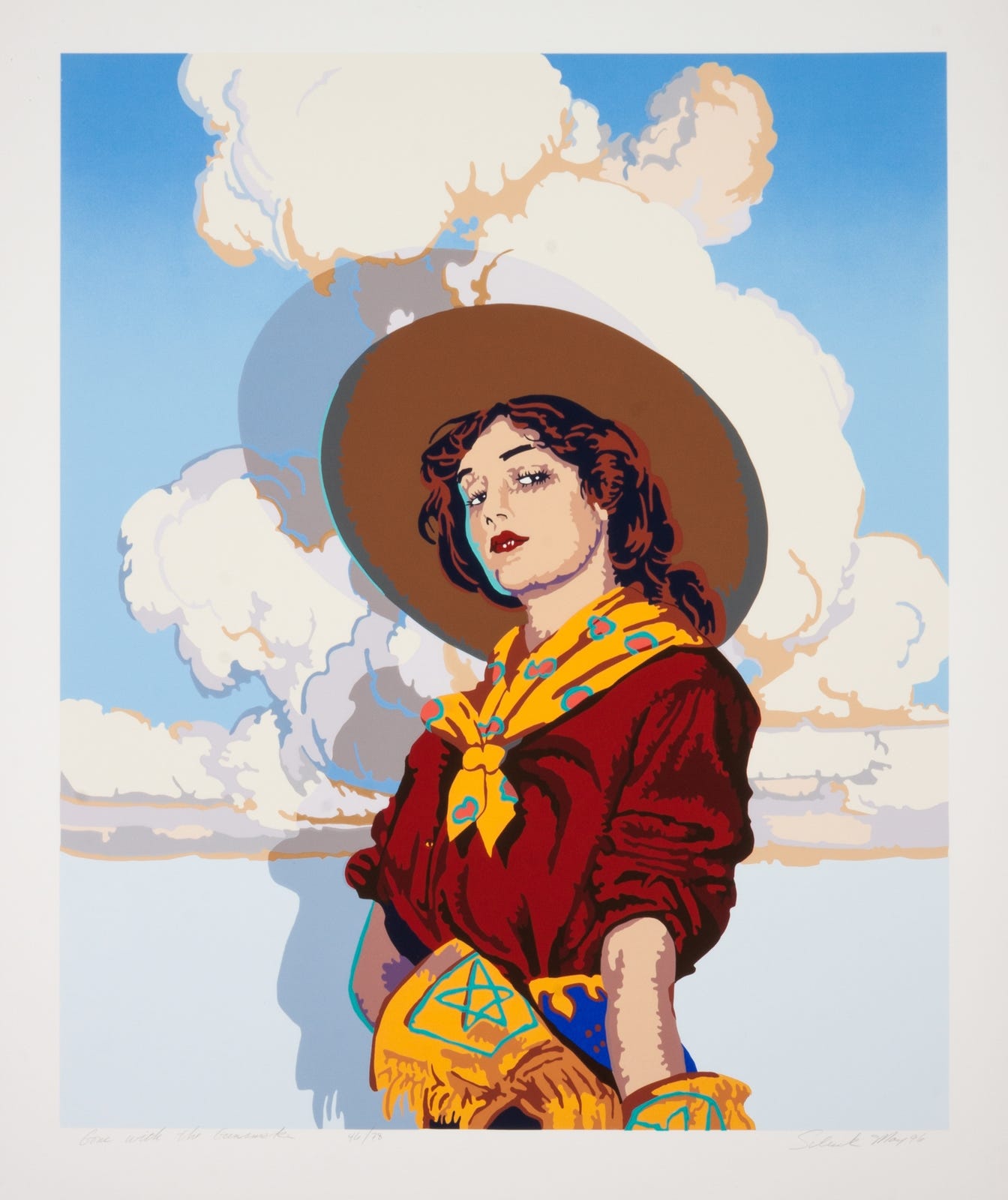
All these things and more add up to a profound awareness that I belong here, no matter what may be going on in my life or family, no matter what happened in my past, and no matter what kinds of risks I had to take or trials I had to endure to get here.
The golden light upon the mountains last night was like a divine whisper, reminding me that I was safe, that everything would be okay, regardless of the heartbreak in my family, because I’m home. I’m surrounded by people who love me and by a community that supports me — a community made up not just of people, but also the vast network of healing elements Tucson offers, from the landscapes to the medicinal foods that grow naturally here. Home is not just the people, but the very landscape itself.
Indigenous traditions often teach this. Western culture focuses on home as being a product of our success or work (the house is a man’s castle), our families (you always go home to mama), or human relationship (home is where the heart is). But all over the world, people with cultures tied to a specific place know that home often first starts with the very land itself. The Tohono O’odham, our local indigenous tribe, translates their name as “We the People of the Desert.” This is true for many of the Native American tribes here in the US. Diné (the original name of the Navajo) means “We the People,” which is then followed by their clan name, like the people of the bitter waters, or the people of the forest. The state of Kansas gets its name from the Kansa tribe, whose name translates to “We the People of the South Wind.” For many Native American societies, their cultural and spiritual identities come directly from or exist in relationship with the land. First Nations people who were forced off their ancestral lands were stripped of their identity as the people of those lands, which is just one example of a legacy of cruelty done to these people, and the damage done cannot fully be quantified. (Side note: if this We the People idea sounds familiar, it’s because the United States Constitution was based on the Huadenosaunee (Iroquois) Confederacy.)
As cruel as forcibly removing people from their homeland can be — especially in our current world of forced migration, modern colonialism, war, and savage deportation policies — having worked with the refugee community my entire adult life has shown me the resiliency of the human spirit even in those with almost nothing left to call “home.” The Bosnian refugees who thrived learned to love Tucson even as they grieved the horrors they experienced in their homeland.
The Sudanese refugees I ministered to when I worked at the church often told me stories of the crowded and impoverished camps they fled to in Kenya, and how they still managed to make toys, teach their children the songs of their homeland, and create objects of beauty, sometimes only being able to wear a single item that reminded them of home. And even there, in that camp, faced with an uncertain future and with no idea of which country would give them legal refugee status, they found ways to forge a community. Some even met their spouses there, or had children there in that liminal space between the homeland they had to flee and the one that would one day accept them as new citizens.
Peoples and cultures with strong ties to a place draw their identity and belonging from the land, and those of us outside of those traditions have much to learn from the integration, respect, and connection that are valued and sustained in these traditions. But sometimes one’s homeland can be singularly unwelcoming or unsafe, so that leaving one’s place of origin is necessary for survival. Having the agency to choose one’s landscape allows us to find the place where we truly belong.
While some people have been torn involuntarily from their native lands, whereas other times the severing of those ties is voluntary and necessary.
I grew up and spent my early adulthood in Florida, but rather than having a connection to that place, and rather than Florida defining who I am, I feel like I escaped from it! And my family of origin, rather than being “my people,” at times feel like strangers to me. I had to leave those places and people to find a new home and new, chosen family. Now I can say that I am a person of the desert just as much as I can say that I am a person of Norwegian descent (I recently discovered and connected with my ancestry and distant relatives in Norway). I feel connected deeply to both landscapes and cultures. I haven’t just built a home here in Tucson — I’ve created a deeply-rooted belongingness here as well, and that sustains me even when life feels chaotic. Ironically, every time I go back to Florida to visit family, I feel almost like an alien. I just don’t belong there at all, even though many others consider it to be a paradise.
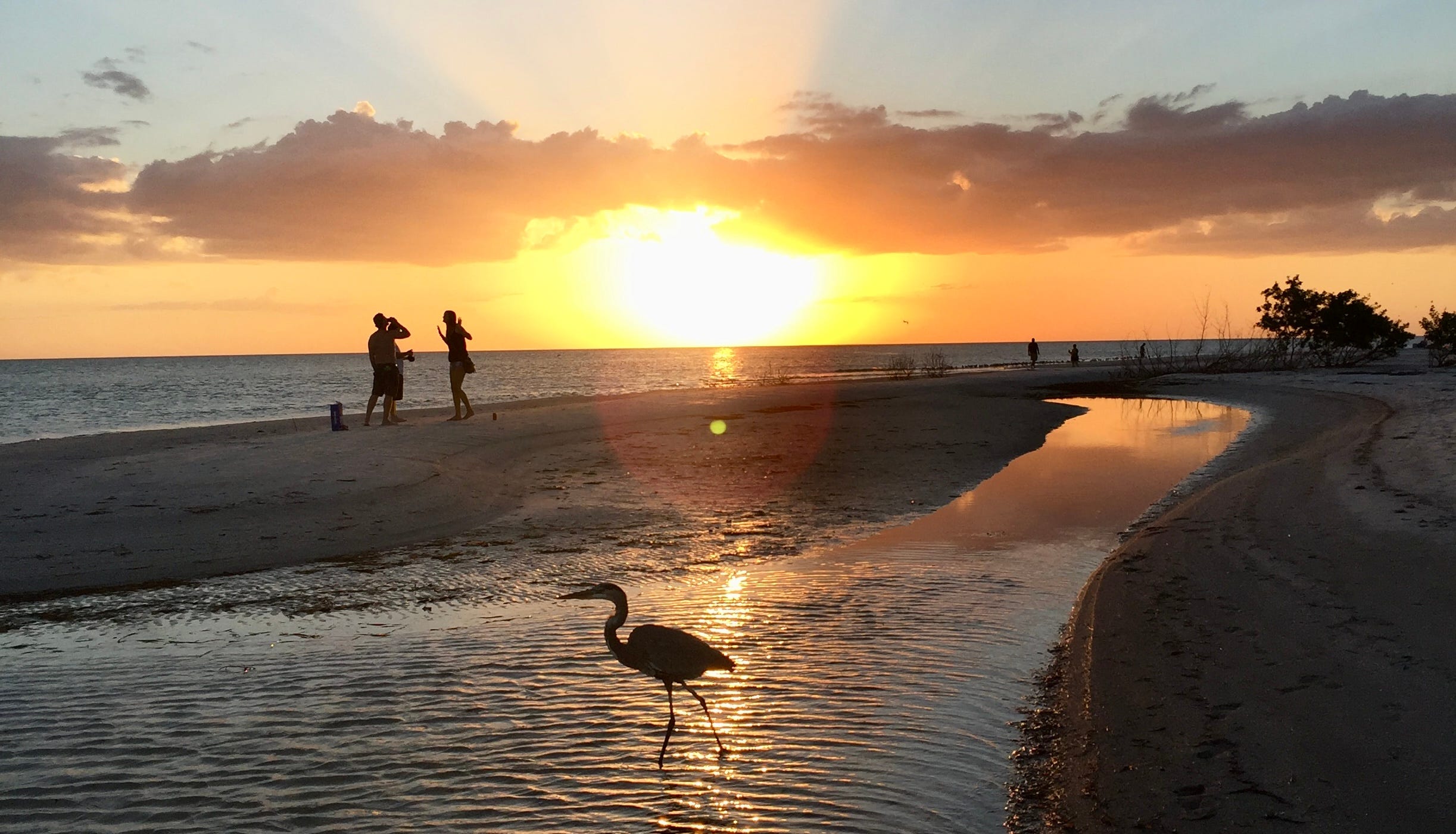
Author, Nurse Practitioner, and Therapist Béa Victoria Albina says that the three things every human needs are:
- Safety
- Worthiness
- Belonging
Her theory is that if we did not get enough of these as we grew up, we develop behaviors to create safety in an inherently unsafe environment.. We make decisions, beliefs, worldviews, and coping mechanisms to fill those voids, and while they were necessary then, we often carry them into our adult lives as patterns that no longer work for us, or even cause us harm. I think there is so much truth to this, and that growing up in a home that didn’t make us feel safe, worthy, and like we belonged is akin to growing up almost emotionally homeless, or as familial refugees.
Now that I’m in my fifties, after a lifetime of work and grace and healing, I can say that I have cultivated safety, worthiness, and belonging in my life — so much that I keep getting reminders of it everywhere I turn — because I am finally at home in almost every area of my life. I may not have been born into this kind of home, but I’ve thankfully been able to find and develop it elsewhere.
One of the lessons from the desert people where I live is that the land is our friend and helper, our ally and our sibling. Every element of the land has some offering of support for us, not as an exploitable resource but as a friend or guide or healer.
One of the “local helpers” is a type of obsidian found in the Desert Southwest is a type of marekanite obsidian commonly called “Apache Tears.” I was taught how to use these as a healing stone by my friend and teacher, Helen Ramon, who is a Tohono O’odham linguist and medicine woman. The stone is pitch black, hard, glassy, and cold to the touch, polished smooth over time and through formation. It is born in violence, forming from volcanic activity, as all obsidian is. And yet, this type of obsidian is different. Somehow, almost miraculously, when you hold it up to the sunlight (or shine a flashlight through it), it turns crystal clear. According the Helen, this is the stone’s powerful reminder that no matter how dark, no matter how hard, no matter how cold, and no matter how much violence there may be in your past, the light can always shine through.
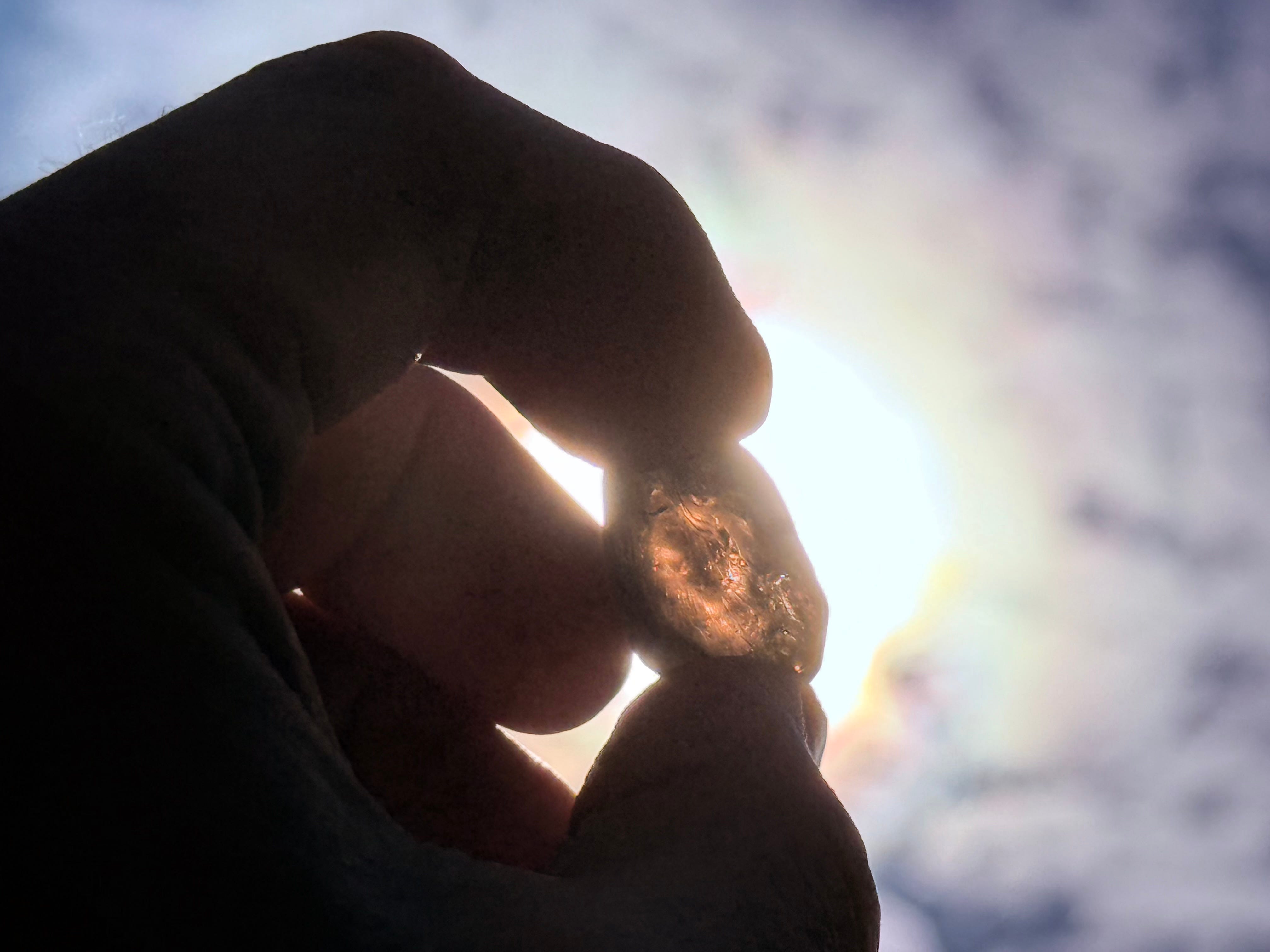
As we are in the darkest and coldest time of year (for those of us in the northern hemisphere, anyway), this mineral friend from my adopted homeland gives me such great comfort. As I’ve done for decades now, I am carrying one in my pocket as a healing ally for as long as I need to, and every time I touch it in my pocket or see it on the counter with my keys I am reminded to look for the light and let it through. No darkness is too great to withstand the healing power of light, which is sure to shine again.
This is my prayer for you too, that you would find your home and all the allies and helpers in it, wherever that may be. Wherever you are and whatever your circumstances, may you find yourself surrounded by community in all forms — human, natural, spiritual — that welcomes you, supports you, and works toward your healing, because you belong.
I love you,
Eric
Kinship: Sky Islands


The aspens flutter
In quiet applause,
As if your journey into nature
Deserves its own ovation.

Welcome home.

Rivers of green and white and gold
Rush down to meet you
As a hundred birds dart away,
Flickering into the periphery
In their startled excitement
At your return.

But then,
Suddenly,
Once you are really here,
Sitting quietly within the landscape,
Gently upon the moss and lichen,
Fallen leaves and stones,
The birds flit their way
Back to the branches overhead.
Squirrels come to make sure it is really you.
The trees and rustling grasses murmur their acceptance.
And now that your kinship is confirmed,
The ground swells up to meet you
Softly
In embrace.
Eric, this is wonderful. This is my favourite poem from what you’ve shared. Thank you for spreading the love, the home and the belonging.
I came across this a day or so ago and thought you might like the way it speaks about the land (my adopted homeland)
https://read.nxtbook.com/trees_for_life/caledonia_wild/caledonia_wild_spring_summer_2025/a_gaelic_view_of_coexistence.html