

We Came to Believe...
Hatchling

Hatchling


Beneath the tree
We found
A gray gasping mass,
Almost featherless,
Eyes still closed,
And barely more than an egg.

Her wing bones spread like a tight comb,
Hair-thin spines fanning out
And contracting
With labored breaths too large
For this tiny body.
Her silent beak opened and closed,
Opened and closed,
In a pantomime of cries.

With a soft voice and careful hands
I gently scooped her from the blazing sidewalk
And ran inside
To find the old feeding syringe
That I kept for moments like this.

I had rehabilitated birds before—
The hummingbird attacked by a cat,
The pigeons and doves that flew into my window—
And I’d rescued lizards and frogs
And both my cats,
And even a black widow
That had lain her eggs
In my living room.

This little white-winged would-be dove,
Nearly nude and with a broken wing,
Gasped a few more times
While I prepared a milky solution,
And by the time I filled the syringe
She was gone,
Completely still
And still warm.

Why did this little thing break my heart?

Why does this tiny silent death
Make the world’s misery
Come rushing in
With the sounds of jets and drones
And other winged destructions?

I could not rescue this dove
Any more than I can redeem the world.
But just like I ran inside
To deliver this tiny gray creature,
I have to try to save who I can,
Because I have seen resurrection
Far too many times
To not do my part.
And even though
I could not keep this bird alive,
At least she lived her last moments
Held,
Loved,
And seen.

And that is more than I can do
For the children
Killed by flying instruments of death
Paid for with my taxes
And always beyond my reach.

I buried the hatchling under the ancient mesquite
By the fountain.

Somewhere, in another country,
A mother cries like a mourning dove
As she buries her child,
And both here and there,
The same sustaining earth,
Without regard to lines on maps,
Embraces both
The hatchling and the child.

War and gravity share a language:
They both pull down what was born to rise.
But at the heavy center of it all
The welcoming loam
Invites the fallen being
Into rest forever,
And those of us still alive
Must do our part
To hold each other
Into life.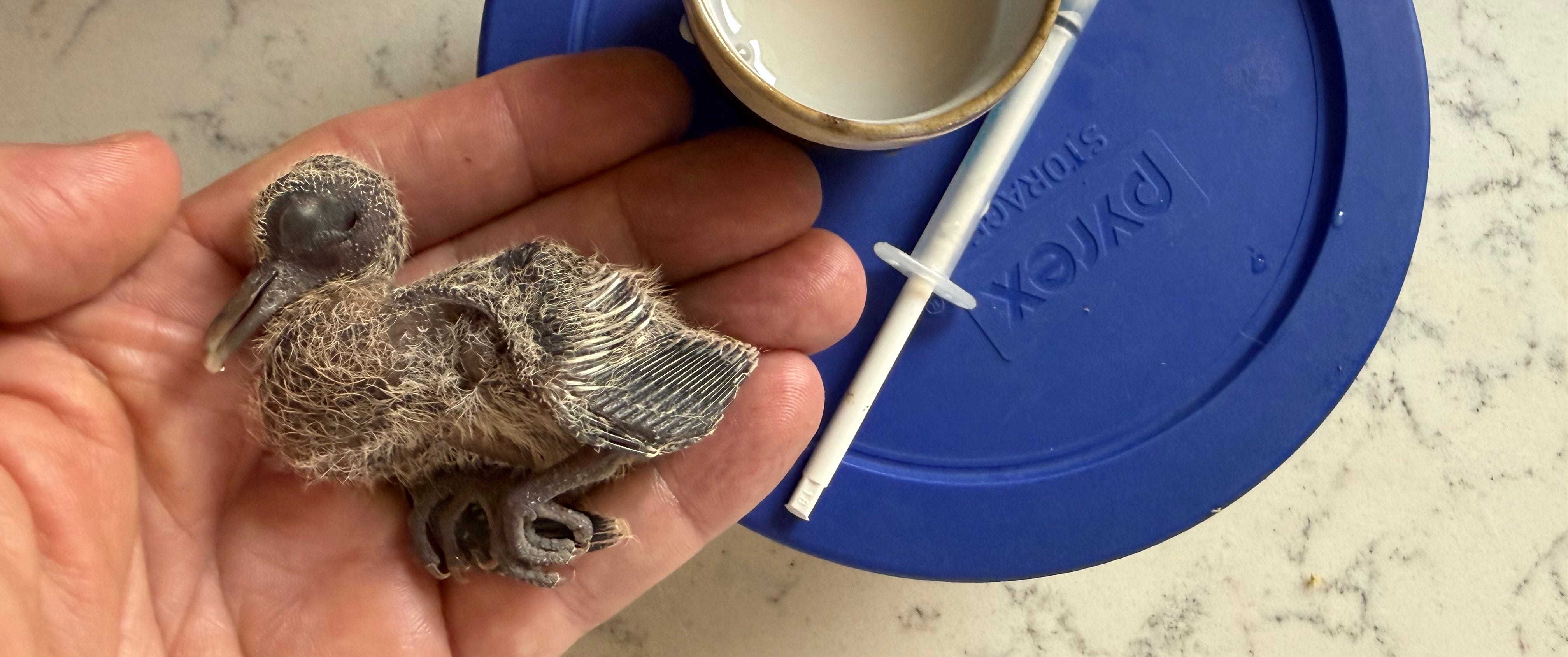
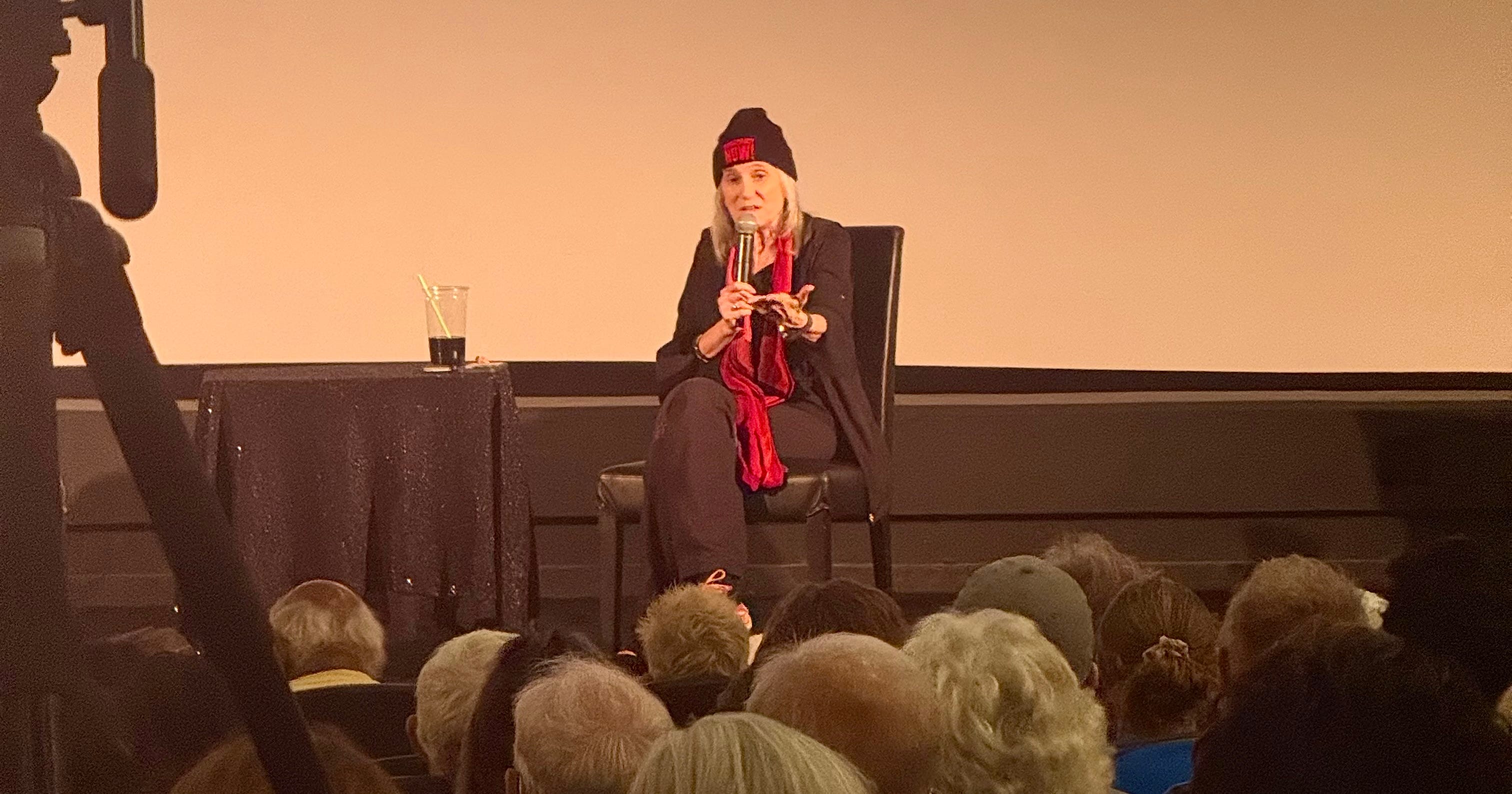
I recently went to a screening of Steal This Story Please followed by a Q&A with the film’s subject, Amy Goodman, afterward. The film followed Goodman as she began her heroic career of independent journalism, risking her life to break important stories that the networks wouldn’t touch, tracing through her greatest achievements and most heartbreaking setbacks.
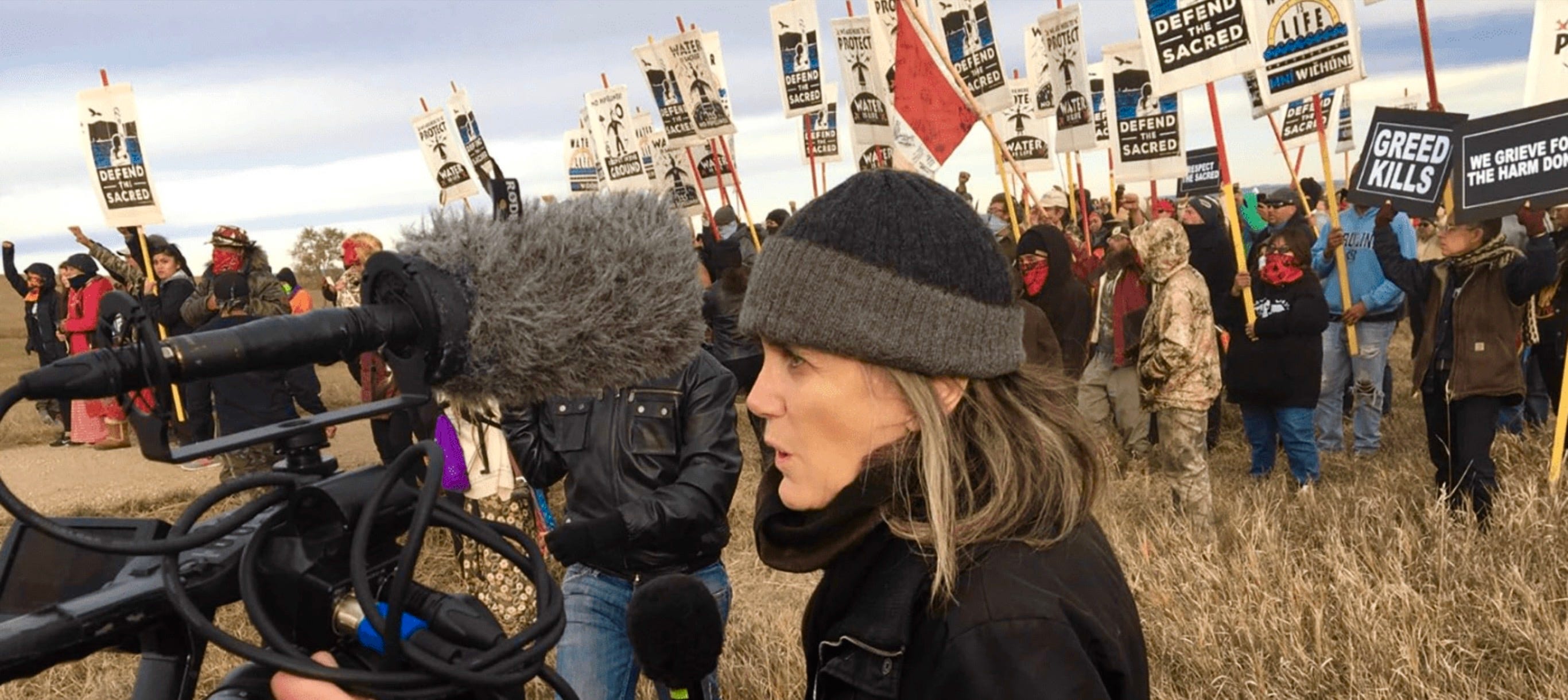
There were times that she broke a story that actually changed the world. Her coverage of a deadly attack in East Timor gained international attention and had massive effects in the region. Her video footage of a private security force unleashing attack dogs on Native American protesters went viral and was picked up by every major news media company, bringing widespread outrage and attention to the Dakota Access Pipeline and the Water is Life campaign against it. Some credit her coverage to the success of that movement.
And then there were the defeats. After her work changed policy, those successes were often undone by a subsequent administration. No matter how much she covered the awful costs of war, some new military violence was always there to be in the news again. No matter the outrage, no matter the protests, no matter the shocking truth of a viral story, bloodshed, injustice, and corruption seemed like a many-headed Hydra, where victory over one evil just spawned another.
There were scenes that made me cry tears of joy as we witnessed the miraculous ability of just a few people to orchestrate real change or bring about justice, and there were times I sobbed at the cruelty of the world and the enormous, dangerous, and corrupting power concentrated in the hands of a few people.
After it was all over, as much as I enjoyed the event, I couldn’t help but feel like the film and following interview had sapped what little faith I had left in this country. Suddenly paying taxes which directly support the violence and corruption in my country’s government, felt immoral, or at least made me complicit. Was there any hope for us? After Goodman’s entire lifetime of incredible successes and giving voice to the voiceless, why did it feel as if things were worse now than they were when she started thirty years ago?
This isn’t just an American experience, now that many of the most important decisions around the world are being made by a small number of extraordinarily powerful billionaires, each with their own agenda and free from the guardrails of accountability or regulation.
This gnawed at me, and I couldn’t stop thinking about it. Was there any hope at all?
It took me a few days (and a conversation with one of my Twelve Step sponsees) to realize that this was triggering me so deeply because it reminded me of something I’d lived through before:
The utter chaos and powerlessness of living with an addict.
It’s been seventeen years since I woke up to discover that we had lost everything due to my then-husband’s relapse into multiple addictions. But for the seventeen years prior to that, I’d spent our marriage trying to change him, heal him, rescue him, or otherwise keep us from facing the consequences of his addiction and my codependency.
Before that I’d grown up in a family of addicts. Multiple uncles would become violent and uncontrollable during family gatherings, and I’d have to watch as they beat my aunts bloody or drove off in a drunken fury, putting everyone on the road in danger. More than once I had to watch in horror as all the adults grew more and more inebriated, and then more and more erratic or violent or confused or inappropriate. If everyone on the boat was drunk, how would we get home? Would this be a night that Bobby would get angry for no reason and start pummeling whoever was nearby? Would Rodney back me into a corner again and scream so angrily that I would be covered in spittle?
Being immersed in senseless danger and violence like that as a kid made me sensitive to it, but that was certainly not the only thing to teach me not to trust the world around me.
As a child of the eighties, I was one of the typical latchkey kids who had to be my own parent. I never once had a curfew, and there were entire weekends where I would go camping in my treehouse and never even tell my parents where I was — and they were fine with that. They were almost never home when I got home from school, sometimes having walked several miles through the woods or along rural highways to get back to my house after theater practice or a homework session in the library. And because we were poor, sometimes I had to figure out what to make for dinner for myself with almost nothing in the refrigerator. Sometimes that was “tomato soup” made with watered-down catsup, and sometimes it was raw carrots dipped in mayonnaise, or a few slices of bologna with condiments but no bread, and it got much worse after my parents divorced.
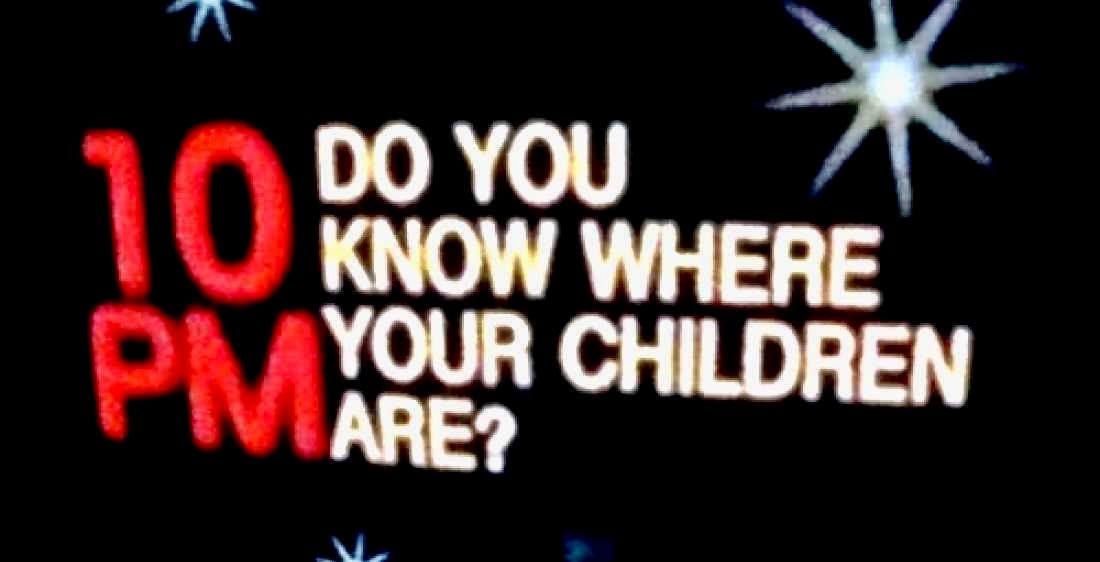
This wasn’t just my household. Neglect was so pervasive in those times that the ten o’clock news used to start with a reminder: “It’s ten PM. Do you know where your children are?” But during the same era of rampant parental absenteeism, my generation also started being inundated with messages about how dangerous everything was. There was “America’s Most Wanted” and Stranger Danger, the AIDS crisis, “This is your brain on drugs,” the satanic panic about demons wanting to take control of our lives through games and music, and pictures of missing children on milk cartons, not to mention all the eighties horror movies that were absolutely everywhere. And, of course, there was the constant threat of nuclear annihilation.
But the scariest of all of it for me, perhaps, was the religious messaging on TV and the radio about how AIDS was a punishment from God, how God was punishing America for abortion, prophesies from televangelists about how God was going to cause just about every kind of plague, that Jesus might come at any time and leave us behind if we were sinning, and that God would test us to prove our faith — even to the point of martyrdom.
My years of theological questioning, therapy, and Twelve Step recovery work have profoundly healed many of the scars created by these fears, but sometimes, when life feels cruel or overwhelming, I can go back to that vulnerable place where I was powerless, scared, and alone in the absence of people who were supposed to be taking care of me.
I’ve realized that this old fear is behind a lot of my doom-filled thoughts around AI, the erosion of human rights, and environmental degradation. It feels awfully similar to the Cold War, when all of us were at the mercy of a few men with access to nuclear weapons. Now a handful of powerful men seem to be acting with impunity as they strip the earth — even in protected places like National Parks and preserves — in order to build technology that nobody can control.
My life is once again in someone else’s hands, but instead of me watching my drunk uncle swerving all over the road as I’m trapped in the back seat, I am watching in horror as world leaders and tech moguls make decisions that endanger us all.
Thankfully, the same thing that helped me find serenity in the face of chaos back when I was married to an addict now helps me find serenity in the face of a world addicted to power, consumption, fame, riches, or whatever profligacy those in power are chasing with no regard to the rest of us.
And that is, “We came to believe that a power greater than ourselves can restore us to sanity.” (Step Two of the Twelve Steps.)
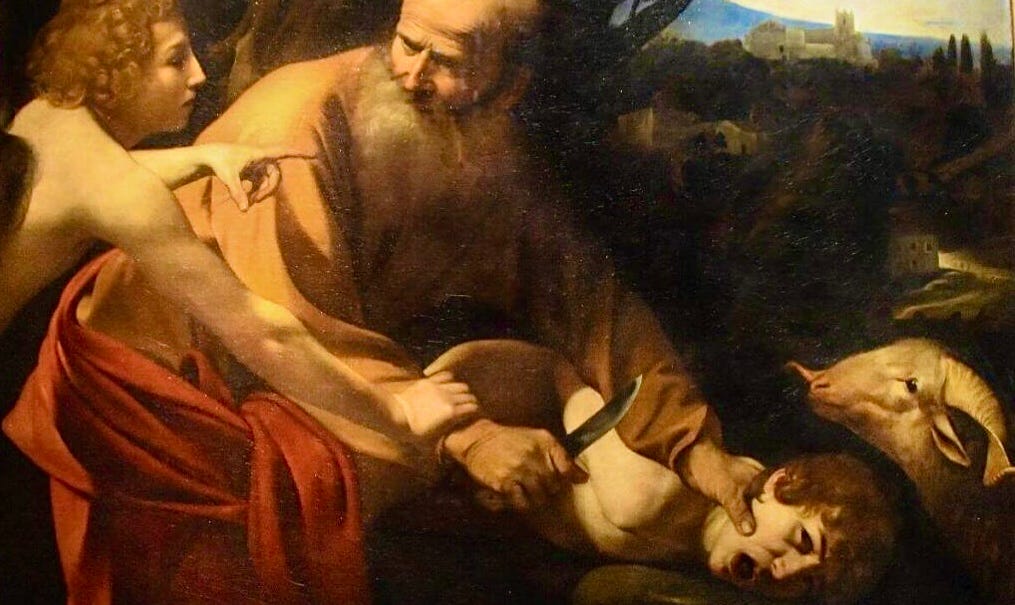
To be honest, completing this Step was one of the hardest things I’d ever had to do in my life. So much of the theology I’d learned both as a child and in Christian seminary made it seem as if God was pretty much insane. Wasn’t this the same God that condoned rape and the slaughter of babies? Wasn’t this the same God who demanded absolute perfection from one person but then let another have multiple shortcomings? The one that wiped out the entire world with a flood? The one who demanded that Abraham sacrifice his son as a test of his obedience? The one who told Moses to tap the rock to perform a miracle, and then made the Israelites wander for forty years and barred Moses from ever stepping into the Promised Land because Moses tapped the rock twice instead of just once?
Talk about capricious! Over and over again in sacred texts from many religions God is depicted as unpredictable and violent and jealous and just as mean as my drunk and abusive family members, and sometimes as terrible as the world’s worst leaders or most violent criminals. In Hinduism, the gods are responsible for the caste system, which was the basis of all manner of injustice, including the global slave trade. (I recommend “Caste” by Isabel Wilkerson if you want to learn more about this.) We’ve all heard of the indigenous religions with gods demanding human sacrifice. And how many religions throughout history actually have a god of war that demands worship?
And yet we are supposed to believe that this kind of insane deity can restore us to sanity?
That was a difficult thing for me to reconcile — but eventually discovered a different power greater than myself that had nothing to do with perfection, retribution, punishment, worship demands, or even obedience. And that “greater power” could no longer be bound to a single book or belief. It was not the God of the Bible or the Hindu Caste system. It was a kind of intangible mystery beyond any of those old stories.
The more I wrestled with this Step in my early recovery from codependency, the more I had to surrender to mystery; to humility; to uncertainty; to wisdom, experience, strength, and hope wherever I could find it; and perhaps most importantly of all, I had to surrender to the fact that I could not force anyone or any system to change. Not only did I have to start finding and trusting in a power greater than myself, I also had to learn to stop trying to be that power for other people. I was trying to be that power precisely because I had not yet found or come to trust in that higher power.
This is a hard realization when we want to force chaos into submission through our own efforts. It’s hard to turn things over to the care of a higher power when we care deeply about others and think we know best.
But sometimes that’s the only way we can breathe when the weight of the world’s problems start to suffocate us.
Just like I was constantly warned as a kid, there are unending reminders that we live in a dangerous and seemingly cruel world, and that the people who are supposed to take care of us are not doing their job. So if we can’t trust in the capricious gods of the world’s bad theology and we can’t trust the powerful people in the world, who can we trust? What is this “power greater than ourselves?”
That’s something everyone has to discover for themselves. The Basic Text of my Twelve Step fellowship says:
“In Step Two, the process of coming to believe in a Power greater than ourselves was a personal one, and completely unique to each of us. For some, it happened quickly, and for others, more gradually, over months or even years.

“When we were new in the program, we may not have been convinced that a Power greater than ourselves could restore us to sanity. Yet one thing was overwhelmingly clear: something or someone had helped the group’s members around us. Many of those we heard sharing in meetings had somehow found a way through the pain we were experiencing.

“The concept of a Power greater than ourselves was something many of us grappled with. Some of us were committed agnostics or atheists who felt a great deal of resistance to this whole line of thinking. For others, anything we perceived as even slightly religious reminded us of painful experiences from our past or conjured strong oppositional opinions. It was hard for us to trust anyone or believe in anything. We resisted this Step, and we worried we would not be able to come to a belief with which we felt comfortable.

“When we struggled with these difficulties, our sponsors were invaluable guides. They explained this was not about religion, but about the spiritual principle of looking to something beyond ourselves for help…”
It then goes on to list various ways people get in touch with this new kind of spiritual strength and trust — and much of it comes down to finding a safe community where one can glean knowledge, hope, and encouragement from the group’s collective wisdom and experience.
As I meditated on all of this over the past few days, I’ve gained a different perspective from the Amy Goodman event. The theater was filled with nearly four hundred people, and it was absolutely clear that everyone there shared a desire to make the world better and more equitable. In all the times that Goodman had created some kind of real change because of her work, it was never just because of her efforts. It was because what she did brought light to a subject that other people cared about, and then those people brought collective resistance or action!
So many of my problems before recovery came from me trying to be good enough (or even perfect) in order to earn God’s approval or blessing, or to avoid God’s capricious wrath or judgment. After a childhood full of cruel lessons, I was desperate to avoid any more pain like that, and at the end of the day, I felt all of the responsibility for my life came down to me and my worthiness. So I worked hard to be a “good” person: to change the world and rescue other people, even if it drove me crazy. I wore myself out in every way possible trying to be worthy of a happy, stable life, but always, breathing down my neck, was a specter of doubt reminding me that one mistake could send me straight off the narrow road and into horrific (and deserved) consequences.
But the story of Amy Goodman, despite her last name, is ironically not about a good person. It is about how one person’s tenacity and courage and ethics helped her find a community of other people with the same vision and mission, and then together, they created something that inspired millions of their listeners to care about an issue in the world. And then this giant crowd of strangers, acting together, made a difference!
Were they able to dismantle all the corruption in the world? Of course not. But they never thought they could, and that acceptance of their own limitations didn’t make them despondent. Sure, it might have made them angry when they railed against a situation that seemed un-winnable, but they let the anger galvanize into courage and passion and productive work. But never did Amy Goodman think she was a superhero who carried the sole burden of changing the world. She amassed the support of millions of people, and she surrounded herself with a team of confidants and allies who helped her do the work that was bigger than anything she, herself, could do.
I think of how my understanding about a higher power has changed since entering recovery seventeen years ago, and I am in awe at how much closer to God I feel than I did even back when I was in ministry. Through my Everyday Divinas and other spiritual practices, I have learned to discern and celebrate divine beauty, love, and wisdom just about everywhere. The “God of my understanding” has grown beyond any sacred text and has written itself across the entire universe, so that I can find the wisdom and inspiration I need in books and flowers and people and animals and stillness and stars and even in my own body.
I learned the Japanese tea ceremony from my grandmother, and earlier today as I was engaged in that spiritual practice, I thought about how much calmness and beauty it brings to my life. My grandmother died when I was still a kid, but all these decades later she still speaks to me and makes my life better. Is that not a higher power?
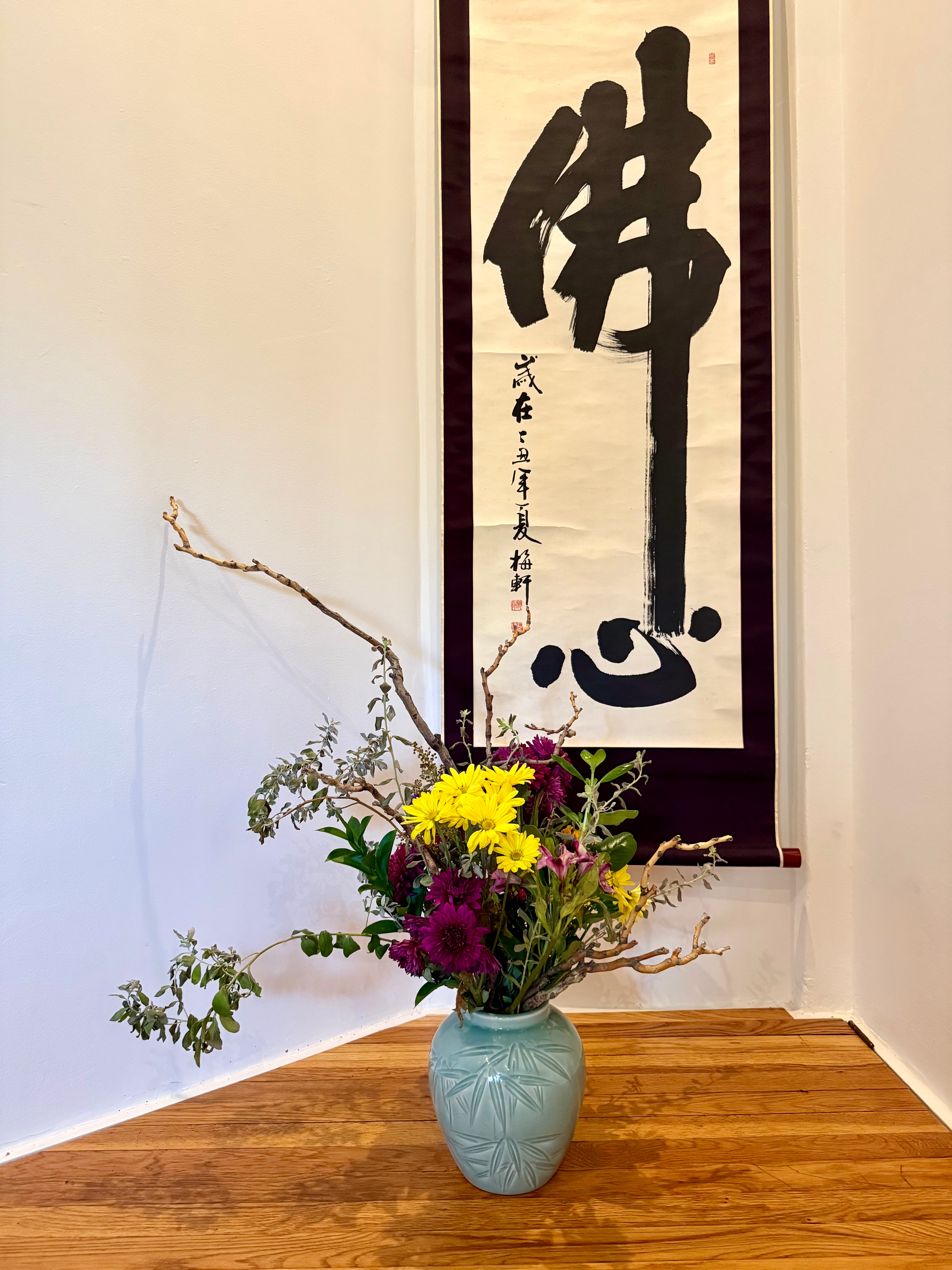
While sipping my tea, I looked at the flowers I’d arranged and the scroll I’d hung and I thought about the hundreds of years of violence and isolation Japan’s citizens faced — and how many of them thrived in those eras by embracing mindfulness and a dedication to beauty through rituals like the tea ceremony.
Today, that seems to be an embodied way to describe how I see my Higher Power. In tending to beauty, I reorient myself away from all the things I can not control, and I focus on the present moment and all the pleasures it affords, as well as reminding me about the things I can actually control. I use all of my senses to invoke reverence, peace, and gratitude, and I humbly open myself to the wisdom of the scroll hung in the altar. Today’s scroll just had the kanji for Buddha’s Heart (fó xīn), which was translated by a scholar as “Our own inner goodness, our most tender, compassionate, and caring self. The higher self.”
This recentered me, and it felt again that I was coming to believe that a power greater than myself was restoring me to sanity. That inner goodness, that tender, compassionate version of myself gets worn down when I try to change the world on my own or try to be “God” in someone else’s life through rescuing or controlling, but when I come back to the present moment in reverence to beauty and compassion, I come back to the best version of myself, and it erases the feelings of powerlessness, despondency, and cynicism that might otherwise tempt me to just give up.
Every time I experience something like this, whether it be in a walk through my neighborhood, a great book, a phone call with a friend, listening to inspiring music, or a million other things that restore me, I reconnect with a power greater than myself, and that helps me return to sanity.
Friend, we do live in an insane world right now, but as hopeless as it seems, when we come back to sanity, we gain the clarity we need to keep going, to keep building the community that will save us all. And belonging to that community means more than belonging to a family or a country or a religion — or even humanity! Our community includes kinship to all life in the world, and the more we connect to it with our inner goodness and compassion, the more likely we are able to keep doing the work to protect the things that we love, free from the paralysis that comes with thinking we have to do it all on our own or simply sit back and offer our “thoughts and prayers.”
My higher power includes so many people, and it offers unending opportunities to nourish myself in everything greater than myself: community, nature, pleasure, creativity, protest groups, libraries of literature, teachers, ancestors, the vastness of the stars, tea ceremony, and anything else that connects me back to hope.
And in those places, I believe, a higher power waits for us with sustaining, empowering, and life-giving hope.
God, grant us the serenity to accept the things we cannot change,
The courage to change the things we can,
And the wisdom to know the difference.
I love you!
Eric