

Just For Today: Lessons from a Trip to Coal Country
Green

Green


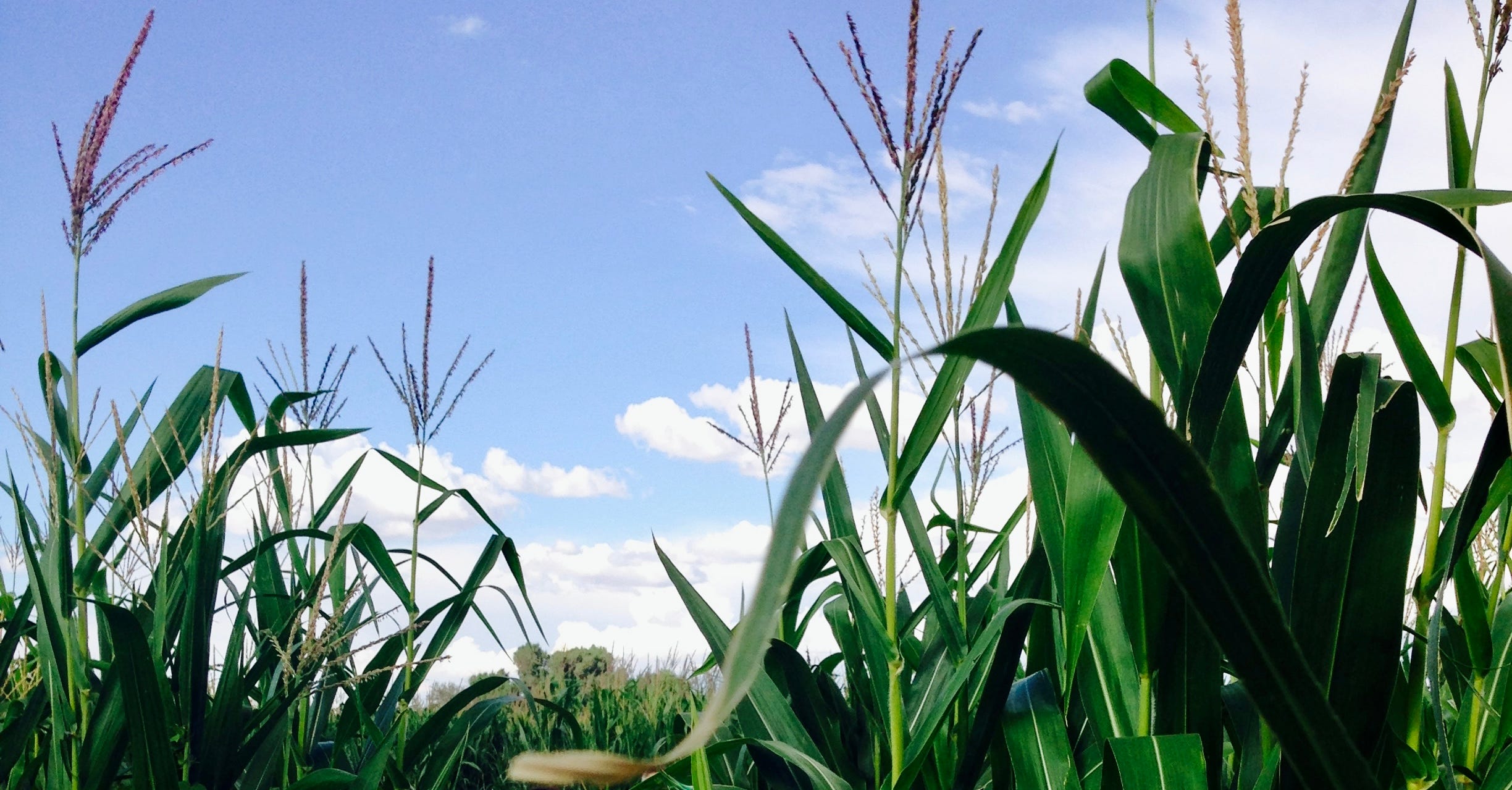
The corn cobs made a verdant ladder up each broom-straight stalk, nearly every newly-papered bundle glowing with a blond tousle of silk. There were millions of them. Maybe even more. I had never seen so much corn in all my life, great living expanses stretched beneath us like an algal sea as our plane approached the tiny airport in southern Indiana.

Once in the field, I could see that each plant was distinct from its neighbor, with cobs at different levels and grassy stalk-tops varying in their height. Up close, the leaves and stalks were like bamboo paper, with tiny ridges and lines in tender emerald shades, rich with life and midsummer growth, licking up the sunlight in what seemed to be an infinity of chlorophyllic cells.

We drove for two hours, past field after field of corn and soy, each square mile a factory of turning sun into food — or in the case of most of this corn — into fuel. The entire state, it seemed, was covered in these viridian undulations, and yet almost all of it would make its way to Illinois to become ethanol, powering our machines rather than nourishing our bodies.

Gas tanks and industry don’t care if there are chemicals on the grain it consumes, and so the quiet rustling of the leaves was ever punctured by the tinny buzzing of far-off planes, dusting the crops with some kind of poison.

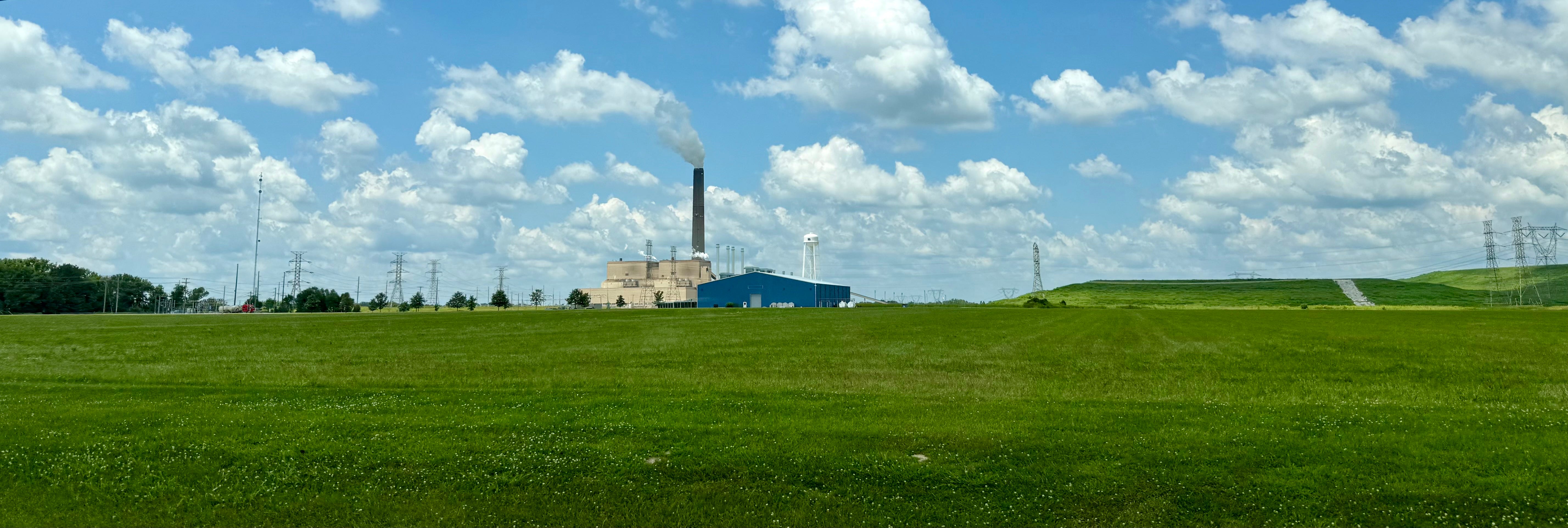
Underneath it all lay coal, as dark as midnight inside a grave. This was another consumption of the land for industry, especially when the miles and miles of cropland gave way to a whole town erased to make room for miles and miles of a single data center. This new hungry machine was being built near the coal-fired power plant, where my hosts would later show me entire trains lined up with open metal house-sized boxes being fed a dark carbonic bounty by dump trucks that looked like a great giant’s toy, each tire taller than a church steeple.

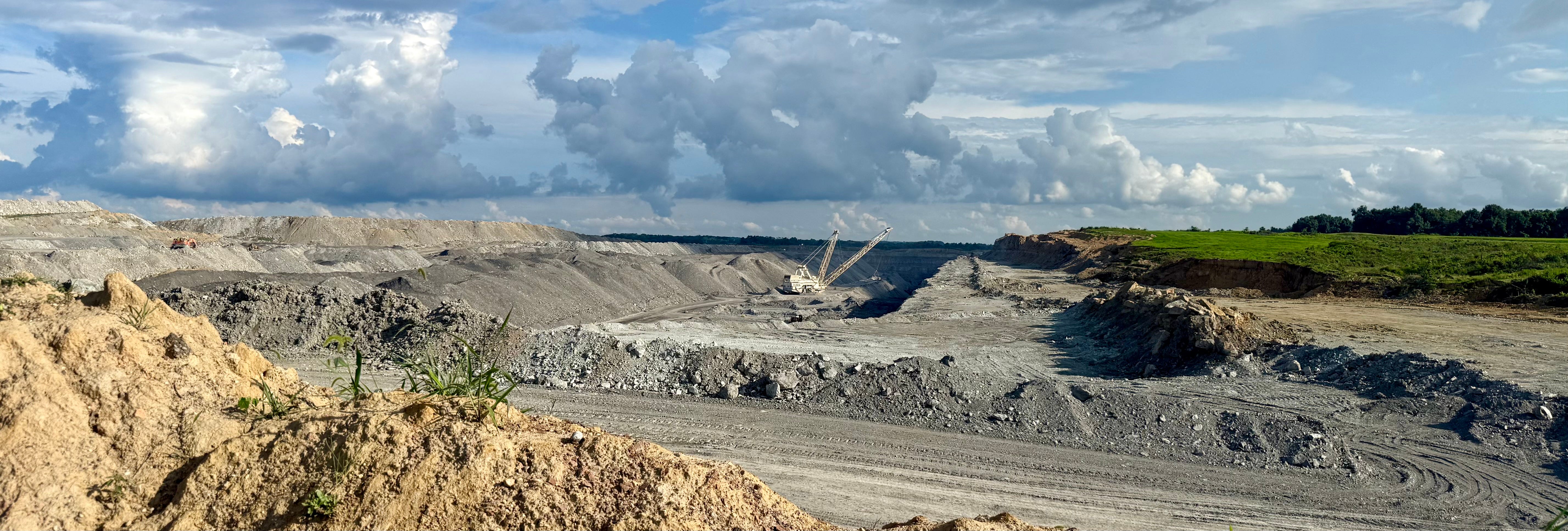
My hosts had been farming their land since the Revolutionary War, and now, heirless, they grappled with a future where their centuries-long inheritance might be scraped away like weeds, the stone foundations of the farmhouse where generations had been born, tilled into the great earthen mounds created by the cavernous depths of a land stripped bare and carved into canyons rich with coal.

Perhaps this is the true Midwest: corn, coal, and corporations, each growing under the sun and rain, and not one of them tended with the care of a gentle farmer’s hand the way their grandparents had taught them, not one who cared to steward the sacred and sustaining land.
I recently returned from a trip to rural Indiana to visit the parents and gravesite of my late friend, author and poet Isaac Kirkman.
Isaac had died during a New Year’s writing trip to Nogales Mexico, in the very first days of 2020, before the wildfires, before Covid, before Brexit, before the impeachment trials, the primary elections, the murders of Ahmaud Arbery, Breonna Taylor, George Floyd, and others, before it seemed like the entire world was ripped apart at the seams.
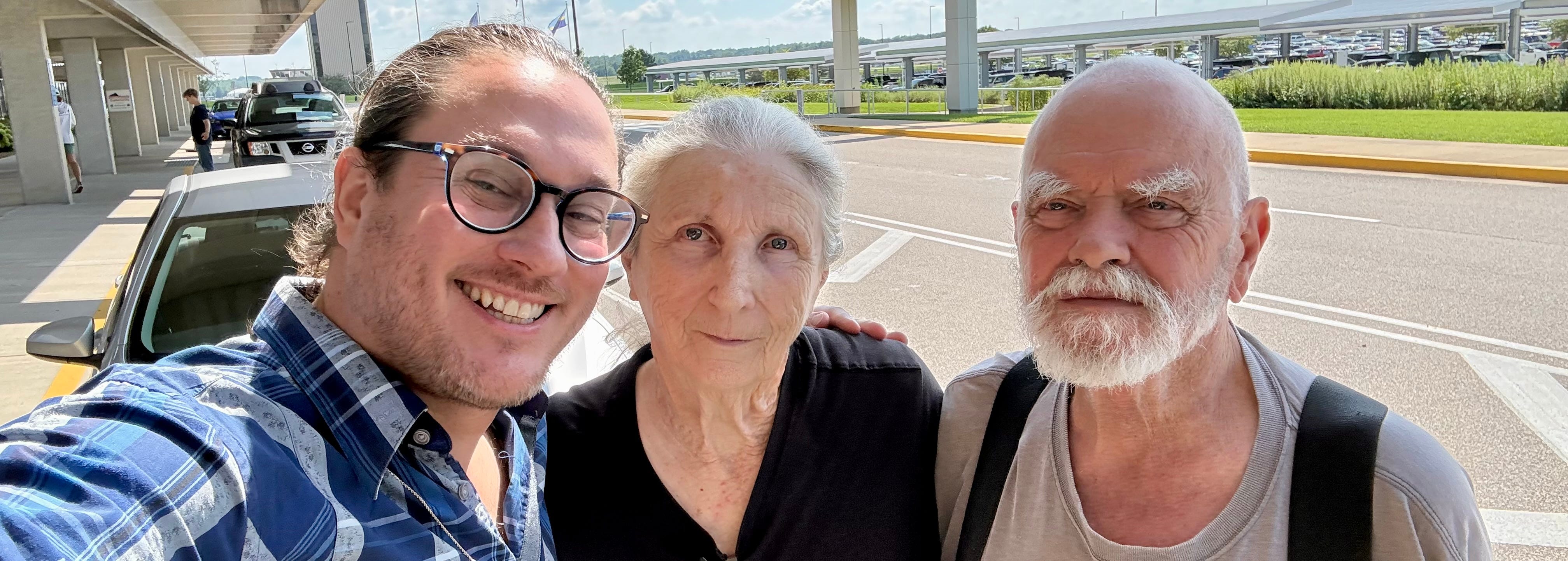
Isaac’s parents, George and Jane, who are conservative and theologically-minded Republicans, stayed with my husband and me for a few weeks as a group of Isaac’s tarot-and-astrology-loving friends helped them deal with the aftermath of Isaac’s death. Together we planned his funeral, helped navigate the intricacies of dismantling a lived-in home, and even journeyed to Mexico together to retrieve Isaac’s body.
Regardless of our differences in worldview, I quickly became close with George and Jane. We saw through each others’ political and religious differences, and, over the past few years, I’ve almost grown to be something of a bonus son to this couple who are now getting closer to being both elderly and heirless.
Isaac wasn’t the only son they’d lost early, and in a foreign country. His older brother had been a strapping world-traveler and former serviceman. He had moved to China after becoming fluent in Mandarin, and he loved his life there until an aortic aneurism suddenly took his life at the age of 32.
Years later, just a few months after his fortieth birthday, Isaac would also die from a heart issue in a foreign country, but his was a death we all saw coming. Isaac had struggled with Ehlers-Danlos Syndrome, a genetic disorder affecting connective tissue. Doctors and geneticists had told Isaac that his variation of the disease was especially severe, so after his fortieth birthday, Isaac let everyone know that he was living on borrowed time.
Feeling his death was imminent, he had also been preparing his legacy. He entrusted The Reading Series, his beloved poetry event, into the hands of his protege, Eva. He told his friends about his wishes for his remains, and he asked me to plan and officiate his eventual memorial service. He told us what he would want to have happen with his clothes, and he made sure we all knew that his own mentor, writer and journalist Carli Brousseau, would be the keeper of his written words. And lastly, he told us of his dreams of living long enough to turn his family farm into a writer’s retreat.
That was part of the reason behind my visit to Indiana. Mostly, I wanted to see Jane and George again after years of interrupted plans, and I wanted to visit Isaac’s gravesite in the centuries-old family cemetery plot. But I also wanted to discuss the future of the farm with George and Jane.
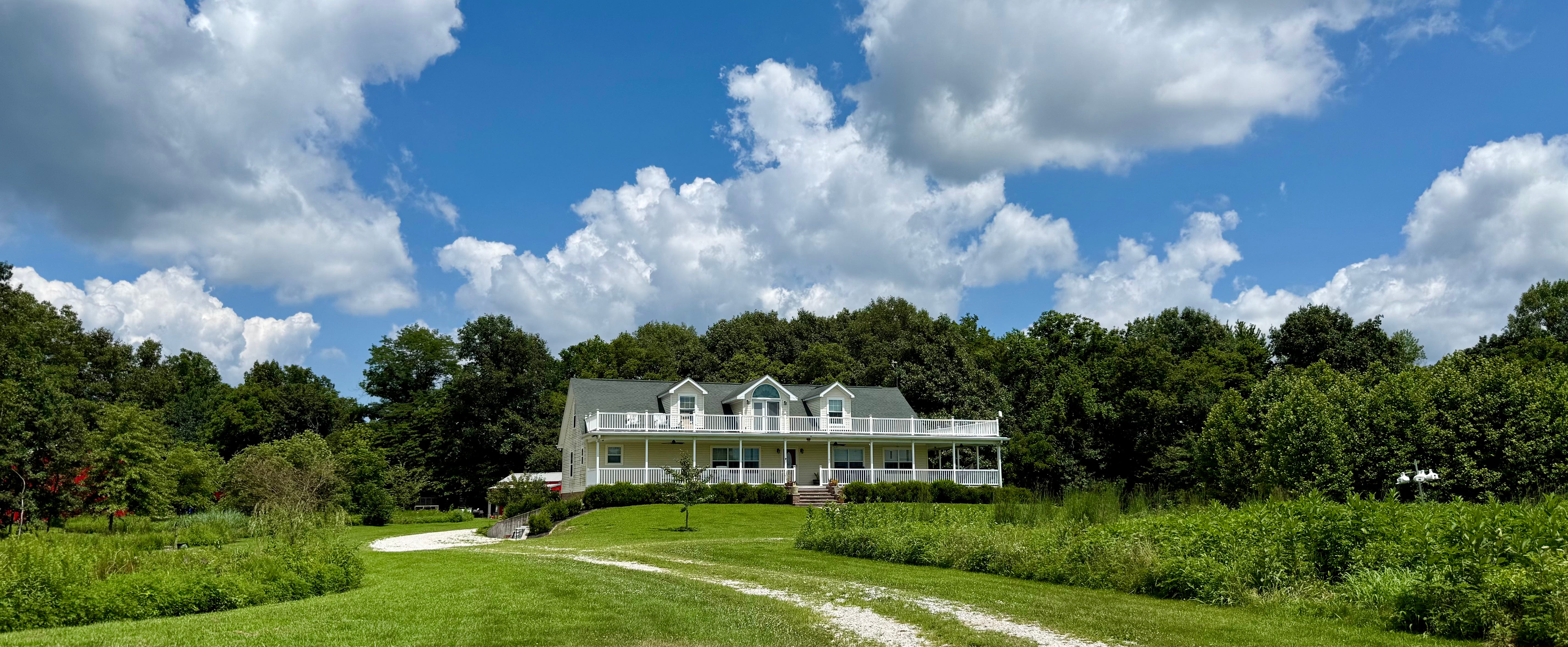
Their ancestors moved to pre-state Indiana from Georgia to participate in the Revolutionary War, and the family has farmed the land ever since. Over the centuries, the massive acreage had changed hands and been divided many times, so that the last of the family farm was about three hundred acres, divided among the last generation’s now-retired heirs.
Upon George’s cousin’s death, his children immediately sold his property’s timber rights, and then they sold the denuded land to the mining conglomerate that controls all of the mines in the region.
In this part of Indiana, almost anything that is not a farm either is, was, or will become a coal mine.
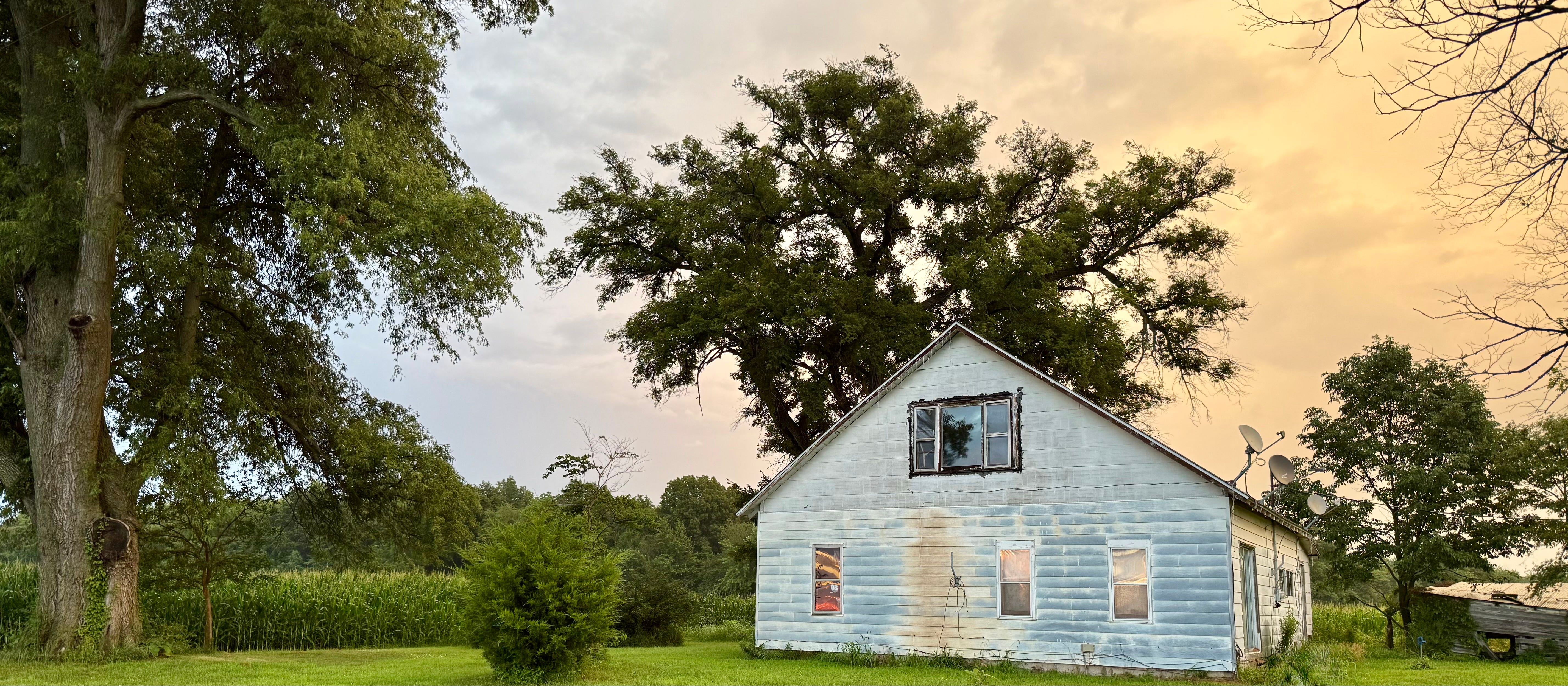
George’s sister still keeps her third of the family farm, renting out the land to another farmer and splitting the profits each year. The old farmhouse where generations of Kirkmans had lived is now used for storage, the old wooden structure covered in old metal siding that has faded over the years. Jane mows the land around the abandoned farmhouse every couple of weeks, because weeds in a town like this are an open invitation to either curious trespassers, vagrants, or thieves.
Nobody in the younger generations wants to farm. Especially when the mines will offer them more than a million dollars for what is left.
When George and Jane talk about this, they speak with the same measured grief and hard-won acceptance of inevitability that Isaac used to conjure when he told us about his painful disease and its pending consequences of an early death. At some point, unless they can find someone with the same values to buy the land, their centuries-old farm will be razed for its timber and then dug up for its coal.
During my visit, George and Jane took me to all the local towns, where entire streets were lined with empty businesses and abandoned homes. “Ever since Walmart moved in, all the other stores went out of business, so people couldn’t make a living in the towns,” said Jane. “The only jobs now are either farming or coal, and nobody wants to live in an empty town.”
I asked if they thought there was any hope for some of these historic villages full of beautiful architecture, once-charming main streets, and weed-filled public spaces. Their response was to take me to the place where a data center is being built. There had once been a town where there was now just naked sand and construction equipment, but so few people still lived there that it had been easy for one of the AI giants to buy out the remaining inhabitants and bulldoze the entire town.
Where there had once been two-hundred-year-old buildings and a storied little town with schools and churches and a post office, there was now nothing but dirt. And soon, stretching for as far as the eye can see, there will be be a gargantuan metal box with enormous power lines hooked up to the nearby coal plant, being fed continuously by the coal being unearthed from beneath extinct farms.
When we got back to their place, they showed me old artworks Isaac had drawn and painted before Ehlers Danlos made it too painful for him to hold a pencil or a brush. They were incredible, especially considering that he was still just a teen when he had to give up his beloved craft.
“I wish Isaac had been able to go into painting instead of writing,” George said, sadly. “Paintings will last five hundred years, but so much of Isaac’s writing is already lost. With a painting, you can just hand it down from generation to generation and everybody can see that it’s good, but with writing, the work so often gets lost to history, especially in today’s world of computers and such.”
There we were again, with the thoughtful and tender wrestling between the desire to leave a legacy and the reality that all of us will probably one day be forgotten. “I guess we’ve come to grips with the fact that it won’t really matter to us if we’re dead,” was a sentiment they used several times over the course of the visit.
While I was there, we did make some more arrangements for Isaac’s things, but it was obvious that time was running out and the very idea of leaving something meaningful behind was withering like crops in a drought. The landscape had changed as subsistence farms turned into massive monocultural agribusiness, then as those farms turned into pit mines, and again as those old pit mines were then “reclaimed” due to state and local laws.
But even the reclaimed land was anything but natural. There were no guidelines for reclamation except for the mining company to fill the massive pits they’d excavated, using the mountains of dirt from prior digging. Then they just “let nature take its course.” Except in this case, “nature” had been expelled, and new invasive species were, without exception, the first to take over the land. Entire forests and prairies of invasive and non-native plants filled the flattened mines, affecting the entire ecosystem.
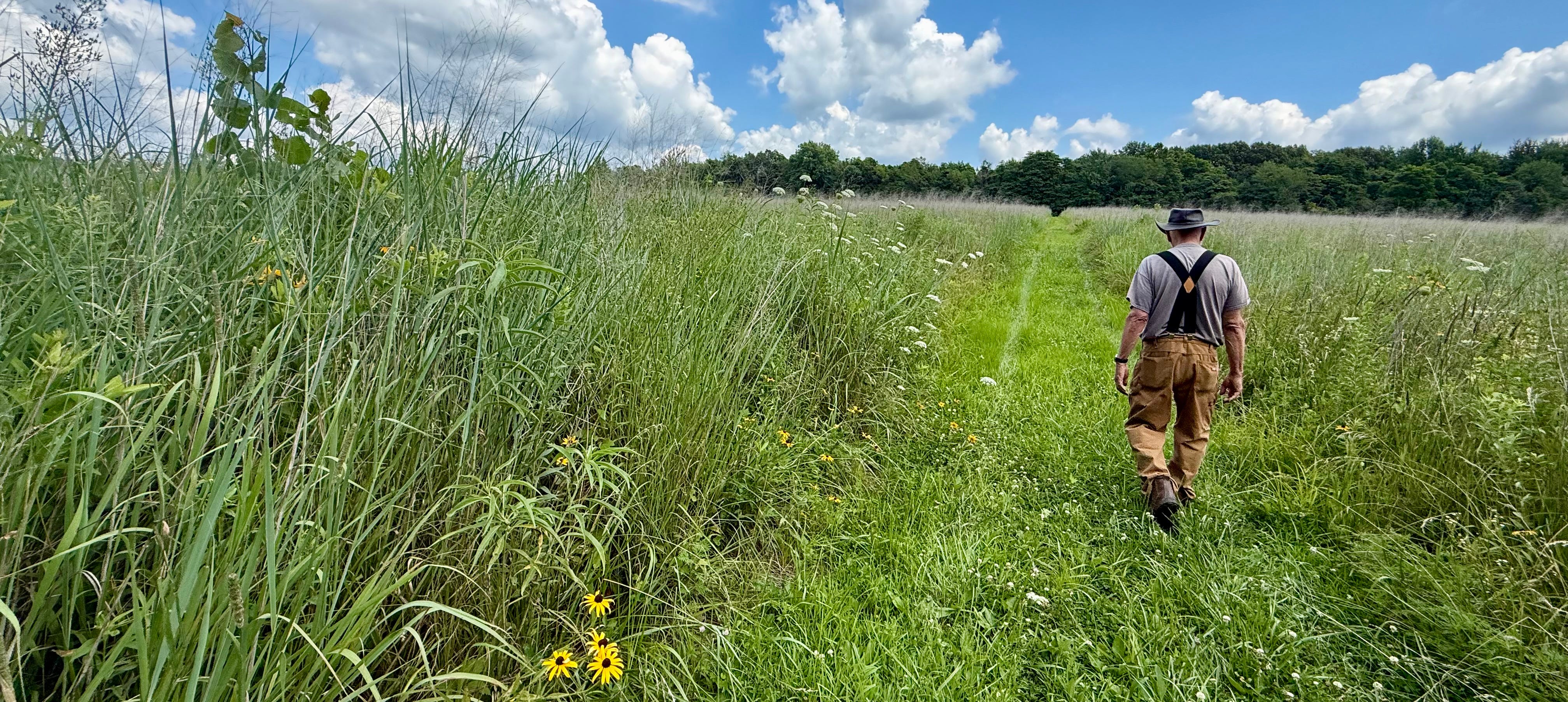
George and likeminded neighbors were the last people planting their fields with native species as part of a program to help migratory birds and pollinators. The government pays them to tend their former farms, digging up invasive grasses and trees to make sure the birds and butterflies and bees don’t starve as they look for the plants essential to their migration.
In all of it, I couldn’t help but notice their grief at confronting the end of the line for their family’s history (and the communal loss of history from the large-scale corporatization of their entire region), juxtaposed with the joy and pride they still had on their little patch of history. Yes, they were sad about it, but they had already started moving toward acceptance, reframing the end of their family line as a story arc that had completed in a much larger tale of humanity and land and legacy. Change was inevitable, so why waste time resisting it when they still enjoyed a happy life on their little piece of paradise?
Honestly, if I had a couple million extra bucks, I’d be very tempted to buy the land and make Isaac’s dream come true. If I committed to living there and keeping up the property myself, they’d be willing to just give it to me, but as much as I love Isaac’s vision, I simply can’t make that work.
The fantasy of a rural life with nothing but birdsong to keep me company came to a rumbling halt early one morning when the entire house shook over and over again like a heaving giant was pounding the earth outside. Afraid that it was a tornado, I ran outside in my robe to discover a bright, cloudless sky still waking up from sunrise.
Later, George and Jane explained that the rumbling had been from explosive charges used for the mines nearby, and it had been unusual that we had missed them in the days prior. They shook the house two or three times a day, with such ferocity that shelves had to be extra secure and cabinets had to have tightly-closing doors. And they would continue to worsen as the mines grew ever closer to the property.
Even the pastoral idyll was lost to the past, no matter how pristine one kept their own land. Corporate mines less than a mile away shattered the peace a few times a day.
What is a legacy when the land is being eaten by corporations? And how can a people adapt to such incredible changes over the course of a single lifetime?
Perhaps that is the question we all face as we watch history unfold at ever-more-alarming rates.
Just as George and Jane are learning to accept that they are powerless over the future of their family farm and the little constellation of small towns they used to love, so too must I accept the things that I cannot change while having the courage to change the things I can.
George’s lesson to me was the difference one person can make despite the ever-encroaching doom. After our long drive from the airport to their farm, I noticed an enormous dragonfly stuck in the grille of their truck. It was monstrous and beautiful like an bejeweled hood ornament — and it was the only insect remains on the car.
I mentioned this to George, and his eyes grew wide in horror. “You’re right! That can’t be good news. I remember when the windshield would be covered in bug guts from a drive like that, but this here dragonfly’s the only one we hit! It must be from all the chemicals.”
A few days later, when we walked through the fields of wildflowers and native grasses George tends with the same care he used to take with his crops, we saw thousands of bees, dragonflies of every size and color, beetles, and even ticks that had hitchhiked on our clothes. We also marveled at all the birds, the tiny rabbits flitting across the narrow trails, a deer standing still and silent, and the vast array of life thriving on his hundred acres of truly — and thoughtfully — reclaimed land.
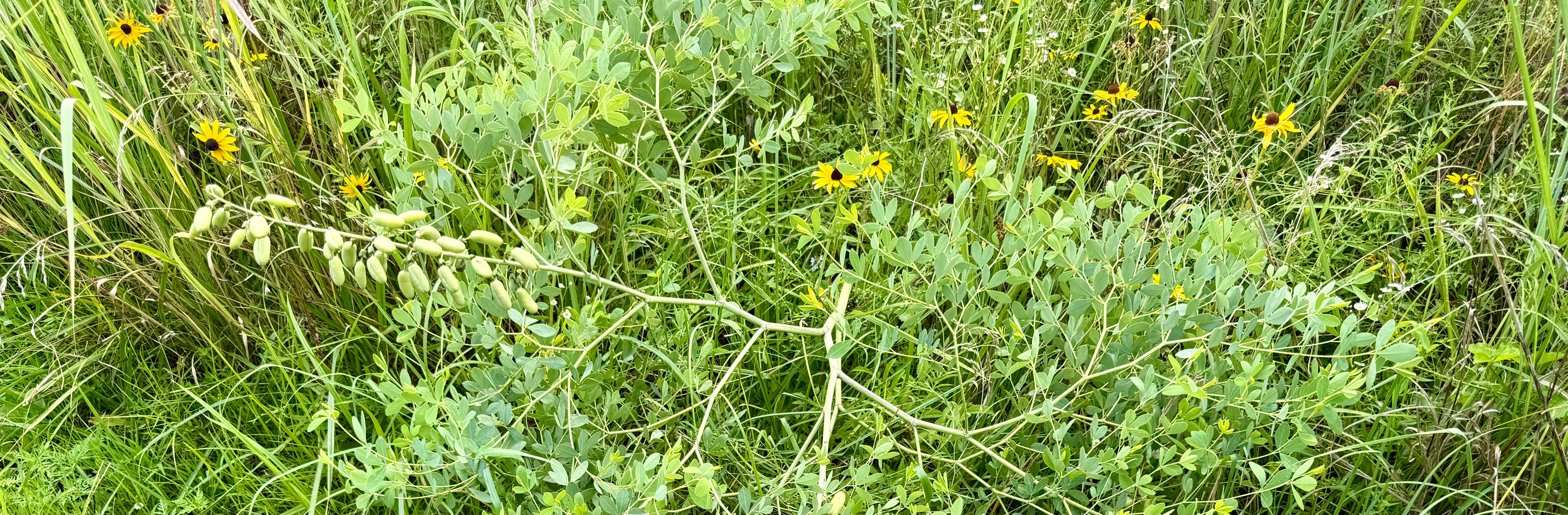
Perhaps this would become a mine, but for now, this was a paradise and sanctuary for millions of creatures large and small.
I want to be a sanctuary like that. Yes, the world seems to be falling apart in so many ways, but there are still wild lands where animals can find their way to abundance, and I have to believe that I can find my way to my land of thriving too. I’ve seen my country fall apart into the corporate mess it is today, but I still have the privilege and power to do my part to help sustain that which has been granted to me. And like a bird searching for a patch of wild berries in a sea of corn and soy, I can scout my surroundings for community, or even dream of migration myself.
In Twelve Step Recovery, there is a slogan: “Just for today.”
Just for today, do I really need to worry about my legacy, my land, my future? And if so, what can I do about it? Just for today, can I enjoy what I do have without denying the reality of the world around me? Can I, like Jane and George, love what time I have left with the beautiful things around me despite the heartbreaking losses I’ve endured, and the deeply uncertain future that seems to murkily unfold before me?
Yes. Just for today, I can take notice of the many shades of green that I couldn’t even name in those rustling cornfields that stretch for miles on end. I can be grateful for the fact that I have people from every background and belief who have learned to set differences aside in order to love and accept me even more deeply than my own parents can. I can take care of myself with quietude and leisure between the explosive rumblings of the world’s demands.
And no matter where I am, even if I can’t even actually see it, I can appreciate the beauty of a sunset, the majesty of the earth, and the wondrous tenacity of life that keeps on living.
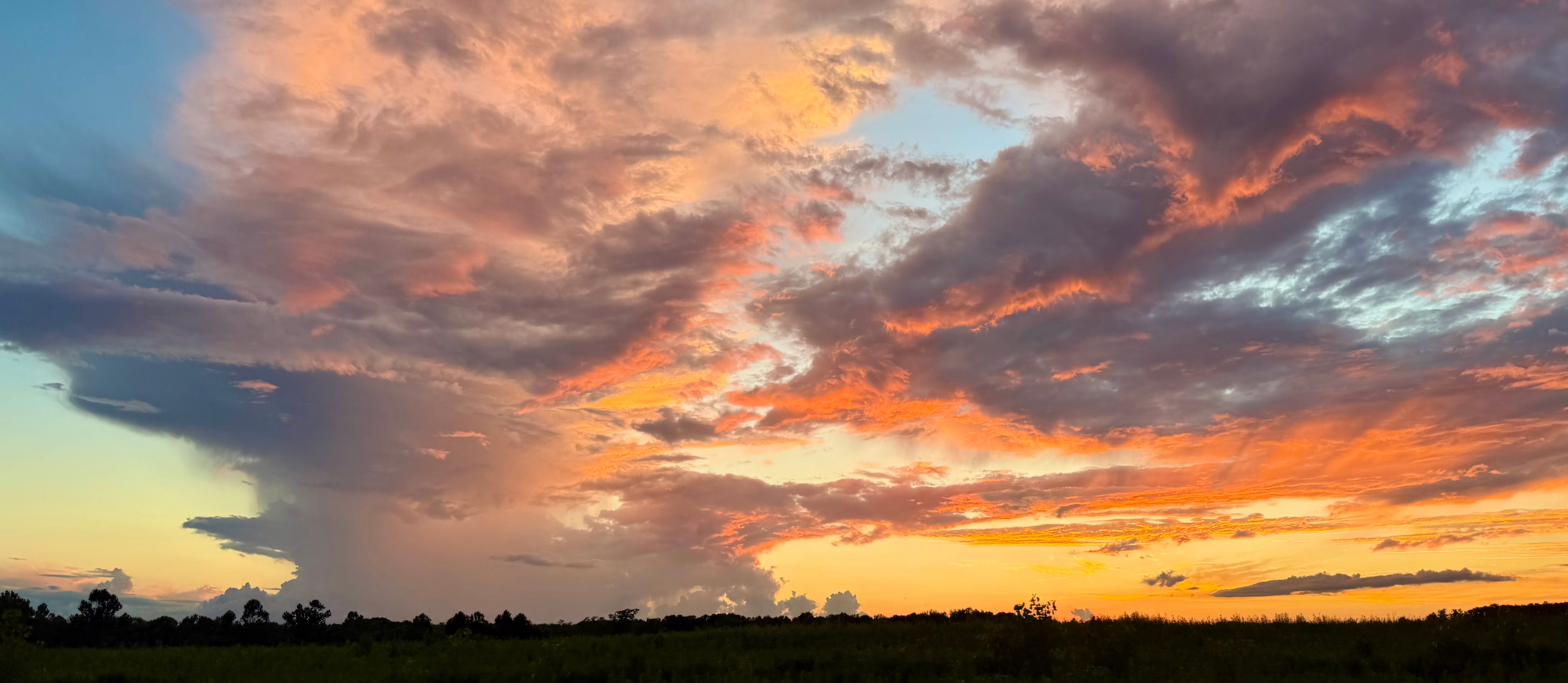
Perhaps this moment is the only legacy I need to be thinking about today.
I love you!
Eric
Wow, that sunset is incredible! Gosh, so much grief on so many levels in this writing. Seeing the juxtaposition of that wild prairie, so lovingly tended, with the barren, grey mine pit is heart breaking.