

Courage is Contagious
Stepping Off the Lotus: Earth Witness

Stepping Off the Lotus: Earth Witness


Every day for twenty years
I prayed a fearsome thing:
“God, do whatever You need to do
To get me to where You want me to be.”

I have learned
That pursuing a true unveiling
Is to be afraid that we will never return
From the awakening,
Even as we long for the truth.

We may not recover
From the epiphany that the unclean man
With the strange hair next to us
Also has a story;
That he is a full human
With a complete biography,
And that just like us,
He has his own way of
Feeling,
Loving, and
Hurting on this planet.

As we dawn into another’s perspective,
Perhaps we will see that
The scheming politician
And the desperate migrant
May unknowingly share mirrored motives
About doing what must be done
To secure a more comfortable future for their families.

Even the entropic addict
Has a plan for his life,
If only for the next brief escape from pain.

All of us have been haunted by a glimpse
At one point or another:
A flash of trauma.
A crime scene.
A naked betrayal.
Evidence we wished weren’t true.
So it makes sense
That gazing upon an uncomfortable reality,
Truly seeing it,
Looking into its depths
And examining its reach
Becomes a Sisyphean task.
Once the light has penetrated our ignorance,
We can never again return
To not knowing,
And yet we also become fully aware
Of our own powerlessness
In the face of the world’s suffering.

It is said that the Bodhisattva was given eleven heads so that she could see more suffering, and then a thousand arms to ease it, but what are a thousand hands in the face of infinite ways to have a broken heart?

It is an imponderable miracle
That all of us —
So many billions —
Are each a self:
With a capacity for pain no less shallow than any other’s,
A propensity for desire just as great,
A drive for relevance just as zealous,
A need to survive just as desperate.

Each time compassion awakens,
Her open eyes demand attention,
And that becomes a blood debt.

To understand that those who are broken
Have been damaged by another —
Maybe even us
Or our ancestors —
Is to be drawn and quartered by empathy,
As those we have judged or reviled
Become kin
In the great family of sentiently suffering beings.
We are exposed,
Naked and dripping blood
When we are whipped with the revelation
Of our own complicity.

Another step forward
On the witnessing earth,
And that epiphany of shared suffering
Grows beyond dawning,
Casting its noonday glare toward other things
Like our perception of kind-eyed cows,
And desperate primates in cages,
And centuries-old tuna
Scooped up by our massive nets,
And then we begin to consider
The strangers mining dangerously
For our copper,
Diamonds,
Cobalt,
And gold,
And we even think toward
Beings not yet born
Who will reap the seeds we sow
With all our wanton buying
And discarding
Today.

It is overwhelming.

The hill of witnessed pain
Becomes steeper with each step
Into this grave attention,
Threatening to crystallize into shame
Instead of blossoming
Into reparation and amends.

So we get distracted,
Lest paralysis settles into our weary hearts.
We send love and light
Or thoughts and prayers and votes.
And
Feeling falsely finished,
We come back to today
Because revelations are too hard to bear,
Too marvelous to live with,
Too terrifying to hold for long.

Until we see someone else
Walking bravely and joyfully and gently
Upon the living earth,
Naked toes tickled by soft and fragrant grasses,
Holding high in one hand
The blazing light of their awakened truth
Despite the sorrow and rage
Resting heavy in their other palm.

Then, one day,
When we learn that balance for ourselves,
We discover the great awakening:
That we were never there
Alone,
And that in concord with countless others,
We had a thousand hands all along.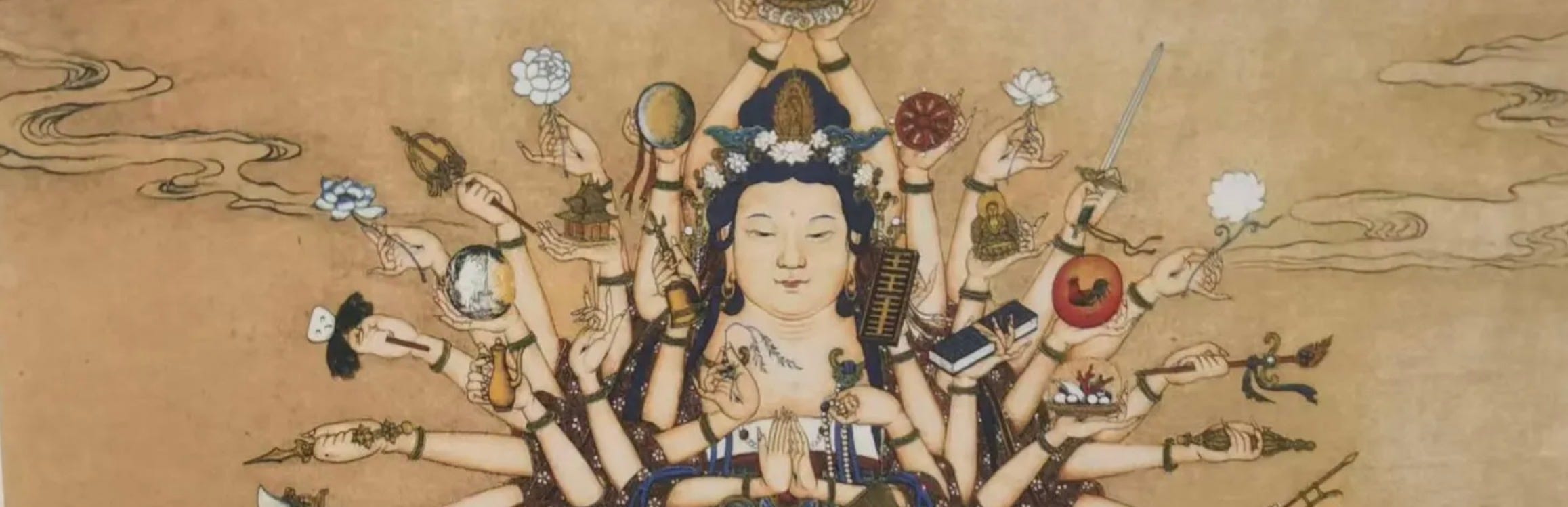
Shortly after returning home from our first time attending the Palm Springs International Film Festival, it was time for the Sundance Film Festival (which we streamed at home this year). This past November I had also attended the Loft Film Festival, all of which added up to me watching more than fifty movies in the past three months.
That may sound like a lot, but I love film as a medium, both as an art form and as a powerful tool for empathy-building. Media such as books, film, and VR take us into another person’s experience. A good piece of narrative art takes us from being a spectator to a participant as it puts us into the experience of someone else.
I’ve attended (or streamed) Sundance every year since 2013 and even worked there at New Frontier, exploring the use of emerging technologies in storytelling. Each year I’d notice that the films often shared a theme — something beyond mere trends and more like the tapping into the zeitgeist. One year we accidentally ended up seeing an entire roster of films about addiction. Another year seemed to highlight films about broken childhoods and rites of passage. Some years showcased various causes of and adaptations to dystopian futures, and others highlighted the joys and struggles of navigating the world as an oppressed minority.
Over the course of the three film festivals I recently attended, I noticed several patterns in what was being produced (or at least what was being chosen by film festival programmers). One of the major themes was the power of everyday people to spark genuine change.
One of the most inspiring films at the Loft Film Festival was Prime Minister, a documentary about Jacinda Ardern’s experience of running for the office of Prime Minister, and then her incredible work and the challenges she faced as a female world leader in the age of Covid and US-backed white nationalism.
Seeing Ardern struggle with imposter syndrome, I was so encouraged when she admitted that she didn’t think she could actually do something — and then she did it anyway. Witnessing her meteoric rise onto the world stage at such a critical time in humanity’s story was incredible, but seeing her do it all with such compassion, such integrity, and such awareness of the repercussions of every decision was both humbling and convicting. She was just a normal woman, full of self-doubt, and yet she accomplished the unimaginable even as she faced insurmountable problems.
I needed a story like that.
Later in the festival there was a film about a chorus, and before the screening the Tucson High School Choir performed live. Putting a new spin on the formal dress code, there were several girls wearing tuxedos and Mexican kids in mariachi and folklórico outfits. The Loft had genderqueer staff, and people from all ages and backgrounds attended the festival, all watching the stories of people from all over the world. It was a place of freedom where diversity was not just tolerated, but celebrated and encouraged! It was as if every person who dared to be visibly different became a walking permission slip, encouraging freedom of expression for everyone else.
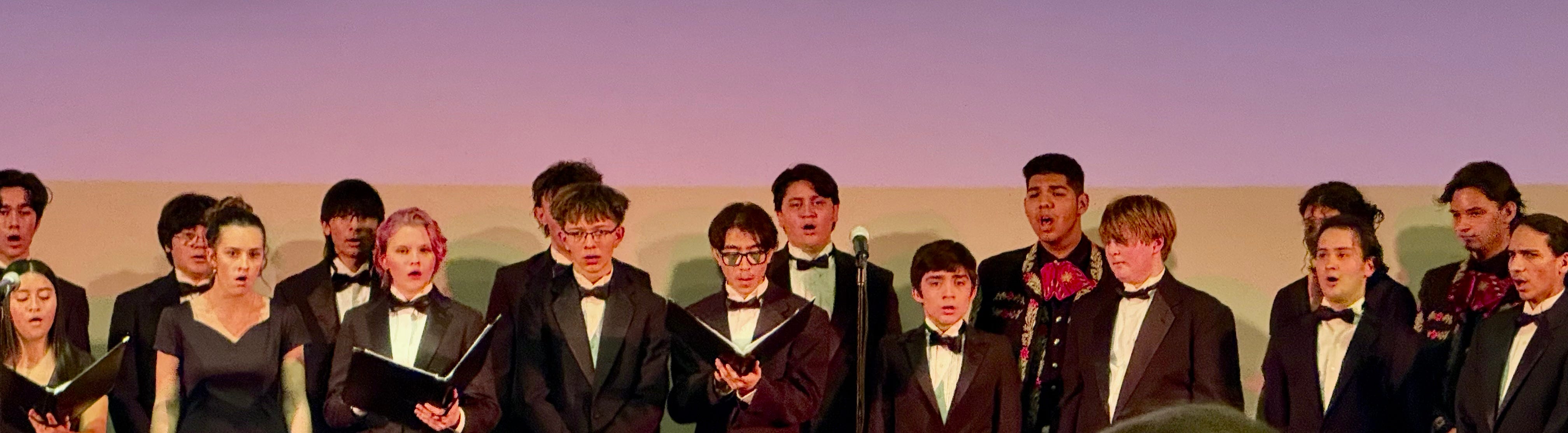
I wrote in my journal after the choir performance:
“It felt like an empathy bomb, shattering walls, destroying old structures — and yet not just destroying. All of the breaking down then gets rebuilt in new connections and awarenesses, and then assembled in community.”
In the face of so much awfulness, intolerance, and outright hatred in the world, for the two weeks of the festival it felt like we were participating in building something new. And each person brave enough to show up fully as themselves even when it might be risky to do so, every filmmaker fearlessly telling the truth, each story highlighting something genuine and vulnerable — all of it added up to an experience that deconstructed barriers and built connection and understanding. It sowed seeds of hope and showed us how there might be alternative ways to live, to prosper, to build community, and to simply exist authentically in this world.
Steeped in this ethos, the whole place became a haven for radical inclusivity, even when people had disagreements, whether they be about little things like the merits of a film or potentially contentious arguments like the Israeli/Palestinian conflict. Somehow, even risky conversations were imbued with this sense of openness and compassion to someone else’s point of view. In such fertile ground, empathy couldn’t help but grow. In that way, the programmers, staff, and volunteers were doing something remarkable to make a real difference, even if only on a temporary and local scale.
Speaking of making a difference, over and over across the three festivals I saw stories about people creating change because they refused to participate in their own erasure. In The Librarians, we saw how quiet and introverted librarians stood against radical book bans and the silencing of history and minority voices. In Jane Elliot Against the World we learned about a teacher’s refusal to ignore her own epiphany about racial injustice, and then courageously becoming an anti-racist in the 1960s and continuing all the way to today, as she takes on racist school boards and helps teachers organize even at the age of 92. In Time and Water, an artist and poet takes on communal mourning as Iceland grapples with the reality of its first dead glacier, and then he takes that mourning out into the rest of the world as he makes space for collective environmental grief.
The power of one person to make a difference was strikingly portrayed in short films too, like La Tierra del Valor (Home of the Brave) which follows Nezza, a popular Latinx singer whose parents both came to the US as undocumented immigrants. Locally famous in LA, she was invited to sing the National Anthem at the Dodgers Stadium, and in her preparations, she discovered that President Roosevelt had commissioned El Pendón Estrellado, an official Spanish translation of the Star Spangled Banner. Nezza asked if she could sing this version, and — spoiler alert — she thought she was given permission but was told just moments before the performance that she would have to sing the traditional English version. She defiantly went out, terrified, and sang the Spanish version anyway as both a celebration of America’s hispanic culture and as a protest against the violent ICE raids happening in LA at the time. That act of defiance immediately went viral, earning her nationwide fame.

Over and over again we saw people making a difference, despite their fear, despite the possible consequences, standing up for their neighbors and strangers alike even if it meant risking their own well-being in the process.
One of the most blatant examples of this was in Everybody to Kenmure Street, a documentary about a wildly successful protest against racist immigration policies by the British government. The film recounts how right wing UK government officials started performing “dawn raids” on the first day of Eid, targeting Muslim immigrants on their holy day of celebration. While two of his neighbors were being forced into a UK Home Office van, a brave stranger dove under the van and held on to the axle so that the vehicle couldn’t move without running him over. In the time that this bought, other neighbors started to come out to block the van, protest, and send out urgent messages to community message boards and social media. By the end of the day, several thousand neighbors had surrounded the van, the immigration officers, and the police, forcing not only the release of the two wrongly detained men, but also forcing a reckoning with immigration enforcement tactics and Scotland’s standing within the UK.
One of the women who had been instrumental in the protest was the daughter of another activist who had successfully staged a nearby demonstration decades prior. His example stuck with her and gave her the courage to come to her neighbors’ aid in a similar situation. He had been brave and unwavering in the face of injustice, and years later, that lesson emboldened her to follow in his footsteps.
This really brought this message home to me. How many of us have witnessed another person’s bravery and been inspired by it? And how often have our decisions inspired someone else, perhaps even our children?
I can’t help but think about a friend of mine who is in the process of divorcing her emotionally abusive husband. She tried for years to make the marriage work, especially since they have two young daughters. The more she tried, though, the more her husband fought back.
He started listening to online content from “the manosphere,” ascribing to “red pill” conspiracies and blatant misogyny. He started to see every request from his wife as an attempt to control him, and he flat-out refused to work on their marriage because he saw therapy, counseling, or even relationship books as something only “weak” men did. When presented with a final ultimatum, he said that marriage counseling was “for patsies,” and that he’d rather get divorced than be a weak patsy. He also refused to do any work on the marriage specifically because it was she wanted, and he was “on his own team.”
As this once-sweet man descended into toxic masculinity and verbal abuse (which I won’t get into further here), my friend realized that by staying, she was teaching her daughters that women should tolerate this kind of behavior and treatment. She had done absolutely everything in her power to make their marriage work, but there was no saving it, so the only decisions left were for her to stay and continue taking the abuse or to leave and make her own life.
Part of her decision-making equation was what she was teaching her kids. And she did not want them to learn, like she had in her highly religious upbringing, that women must stay in their marriages even when their husbands abuse them. It took tremendous courage to leave, especially since she had been financially dependent on her husband, and she faced debilitating loneliness and grief, but it was what she had to do — not only for herself but for her daughters as well.
We never know the seeds we plant in someone else’s life. In the Prime Minister documentary, Jacinda Ardern credits much of her courage to Ernest Shackleton, who famously led an early expedition to the Antarctic. His leadership, wisdom, and compassion saved his entire crew when they were trapped in ice and stranded for nearly two years! It is still considered miraculous that he was able to sustain all twenty-seven men under his command considering the grueling environment and what should have been deadly circumstances. One of the things he credited with their survival was his refusal to give into despair. He said:
“The quality I look for most is optimism: especially optimism in the face of reverses and apparent defeat. Optimism is true moral courage…To be brave cheerily, to be patient with a glad heart, to stand the agonies of thirst with laughter and song, to walk beside death for months and never be sad – that’s the spirit that makes courage worth having.”
I love that: Optimism is true moral courage! Decades later, just as her entire world was about to change, Jacinda Ardern happened to be reading his biography, which gave her the courage to take each next step that she had to take. Shackleton’s example is what she clung to while facing her own insurmountable odds, and now it continues to speak volumes to us today.
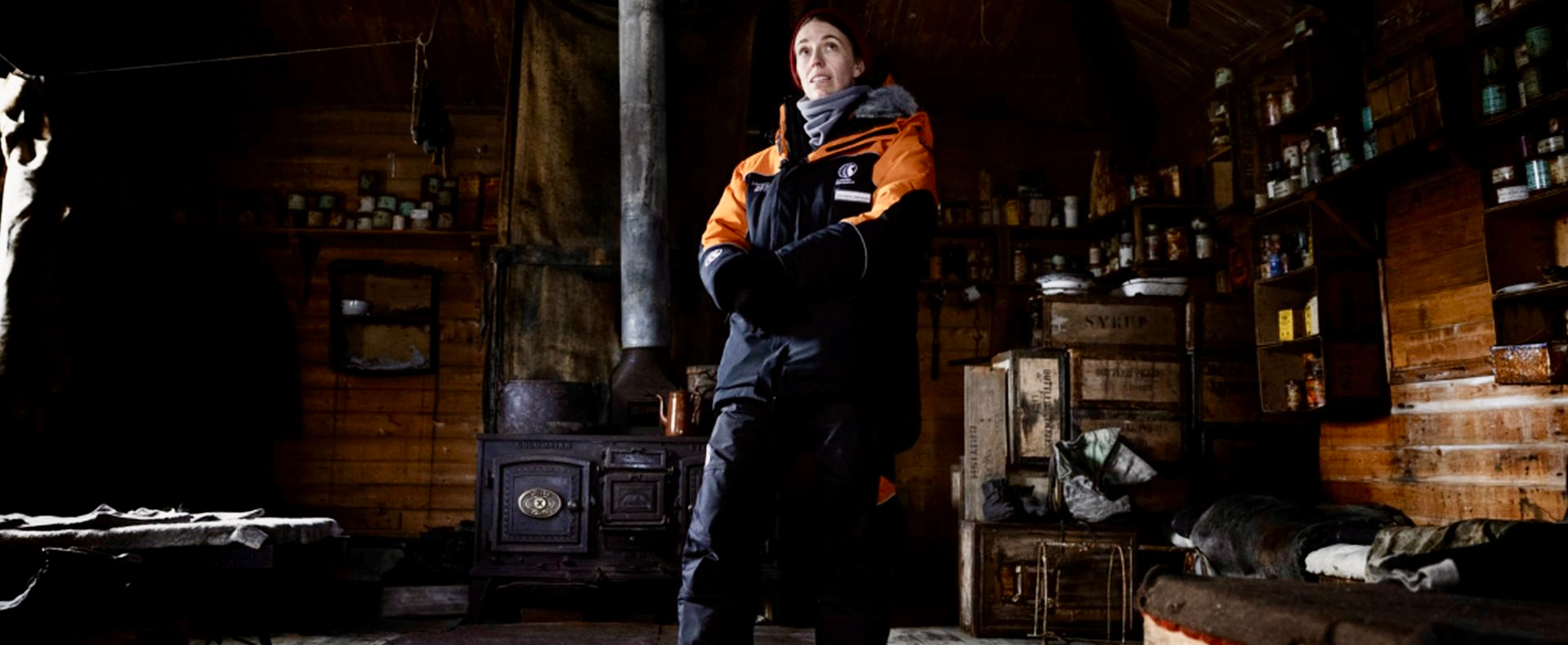
It is hard to face this world in its current state when even just paying attention to the news for a moment tempts us into sorrow and hopelessness, but optimism can inspire action, which can then inspire others.
That stranger who leapt under the immigration van knew he only had a few moments to act and might not even make a difference, but he hoped that he could buy some time, and that’s what happened. Plus, his brave and hopeful actions inspired others, and that immediately spread like wildfire, inspiring thousands of others to mobilize.
Our world and our history are full of stories of people who made a difference just by staying true to their own convictions. From enormous contributions to society, like Rosa Parks, Malala Yousafzai, and Temple Grandin, to unsung heroes like mothers who model bravery to their daughters and educators who teach their students to cultivate empathy, we have seen time and again that courage is contagious, and that one person’s bravery can then ripple out to inspire others. And then those ripples sometimes turn into genuine societal transformation.
I am reminded of a poem that I love that speaks to both the reality of this troubled world and the hope of what is possible:
Good Bones
By Maggie Smith (from Waxwing, Tupelo Press

Life is short, though I keep this from my children.
Life is short, and I’ve shortened mine
in a thousand delicious, ill-advised ways,
a thousand deliciously ill-advised ways
I’ll keep from my children. The world is at least
fifty percent terrible, and that’s a conservative
estimate, though I keep this from my children.
For every bird there is a stone thrown at a bird.
For every loved child, a child broken, bagged,
sunk in a lake. Life is short and the world
is at least half terrible, and for every kind
stranger, there is one who would break you,
though I keep this from my children. I am trying
to sell them the world. Any decent realtor,
walking you through a real shithole, chirps on
about good bones: This place could be beautiful,
right? You could make this place beautiful.
Yes, it does seem that “the world is at least fifty percent terrible,” but we must keep trying to show people the “good bones” of the world. No matter how much damage has been done to our world, we have to keep selling the very real idea that we could make this place beautiful, because we are the only ones who can actually make it so.
I have to believe that my own courage can make a difference. When I was growing up as an intersex kid in the rural south in the 1980s, I had no role models. I thought I was a freak with an extremely rare disorder, and society shunned me at every turn. And yet I kept living authentically, even when my mother tried to kill me for being gay (yes, really), even when I lost jobs and apartments, even when I was gaybashed, even when I was spat upon, and I eventually went into ministry to try to make the world a more open and accepting place for other queer people. I had to believe that it was possible, and that hope kept me going when I faced incredible persecution.
Now, thirty-some-odd years later, we have gay marriage and equal rights legislation, and I am now connected to an entire community of intersex and queer people like me. Back when I was a kid, I was told that my intersex body was a problem to fix, and I could only dream that I would one day find other people like me who were born with both male and female characteristics. Now there are actual intersex celebrities, like Jackie Blankenship, River Gallo, Pidgeon Pagonis, Alicia Roth Weigel, Caster Semenya, and Hanne Gaby Odiele! How much easier would my own journey have been had I had role models like that growing up? And how much better will today’s young kids be knowing that people like us not only exist, but that intersex traits are as common as red hair, and that we can lead vibrant, full, beautiful lives?
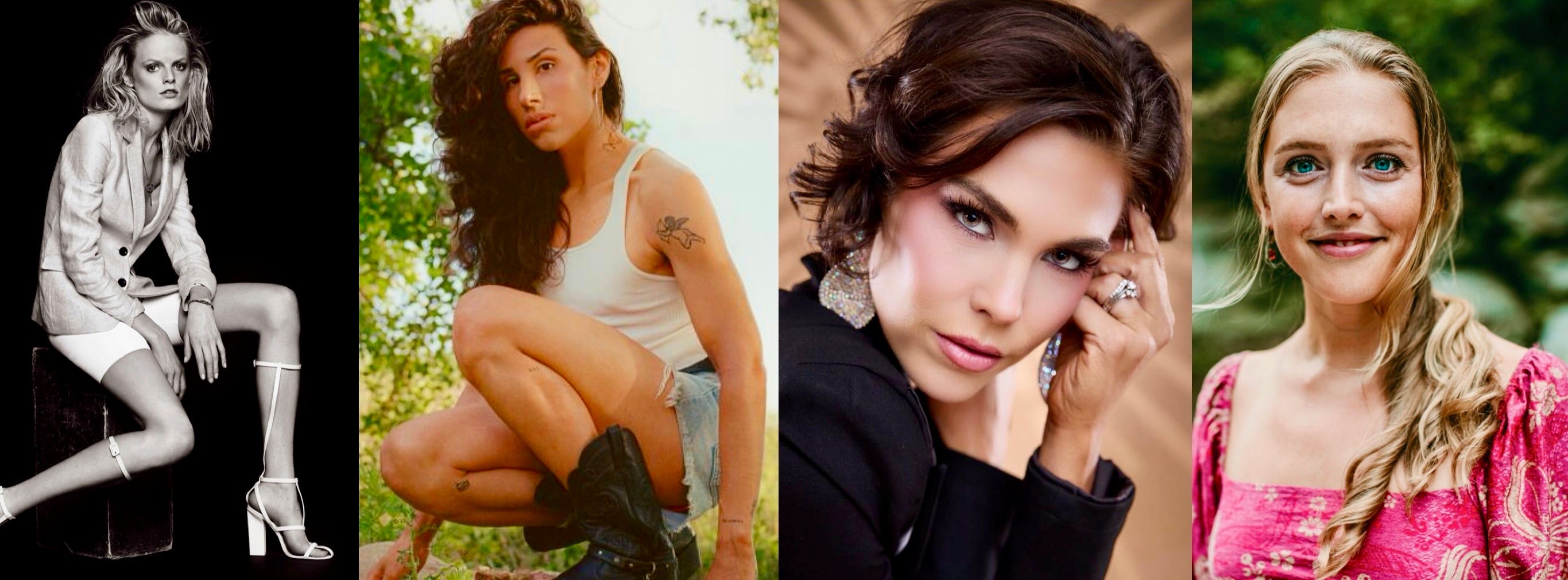
The hope that I would one day experience this kept me afloat even when my own doctors tried to convince me that my body was somehow broken or wrong. It kept me going when people bullied me because of my androgynous features or my refusal to fit into any one binary way of expressing myself.
Now, I need to draw on this same strength in order to stay awake in a world that demands attention. Every day I am aware of another injustice, and the temptation can be to either numb myself out or give into despair. What I’ve learned, though, is that neither of those is a true option. Just as I can not fix all the world’s problems, I cannot ignore them all either. So what can I do? I can cultivate the hope I need to keep going, and I can inspire hope and action in others. I can do my part and let other people do theirs.
In the demonstration at Kenmure Street, only one person needed to be under the van. Another person was a nurse who ministered to the needs of “van man.” Others spread the message on social media, others called news outlets, some provided food, some opened their doors for people who needed bathrooms, some provided legal counsel, and some just put their bodies in the way. No one person saved the day, but each person did their individual part, and that ended up causing a cumulative and ultimately massive change.
Some of us are called to be brave for our children, others are called to raise money, some find their purpose in living authentically, speaking out against injustice, or donating small but predictable monthly amounts to social justice initiatives. Some organize marches or take food to people who are afraid to leave their houses. Some practice creative resistance through art, film, stage, and writing. Some, like my husband, who is a public psychiatrist, work with local government offices, agencies, and police to advocate for the mentally ill.
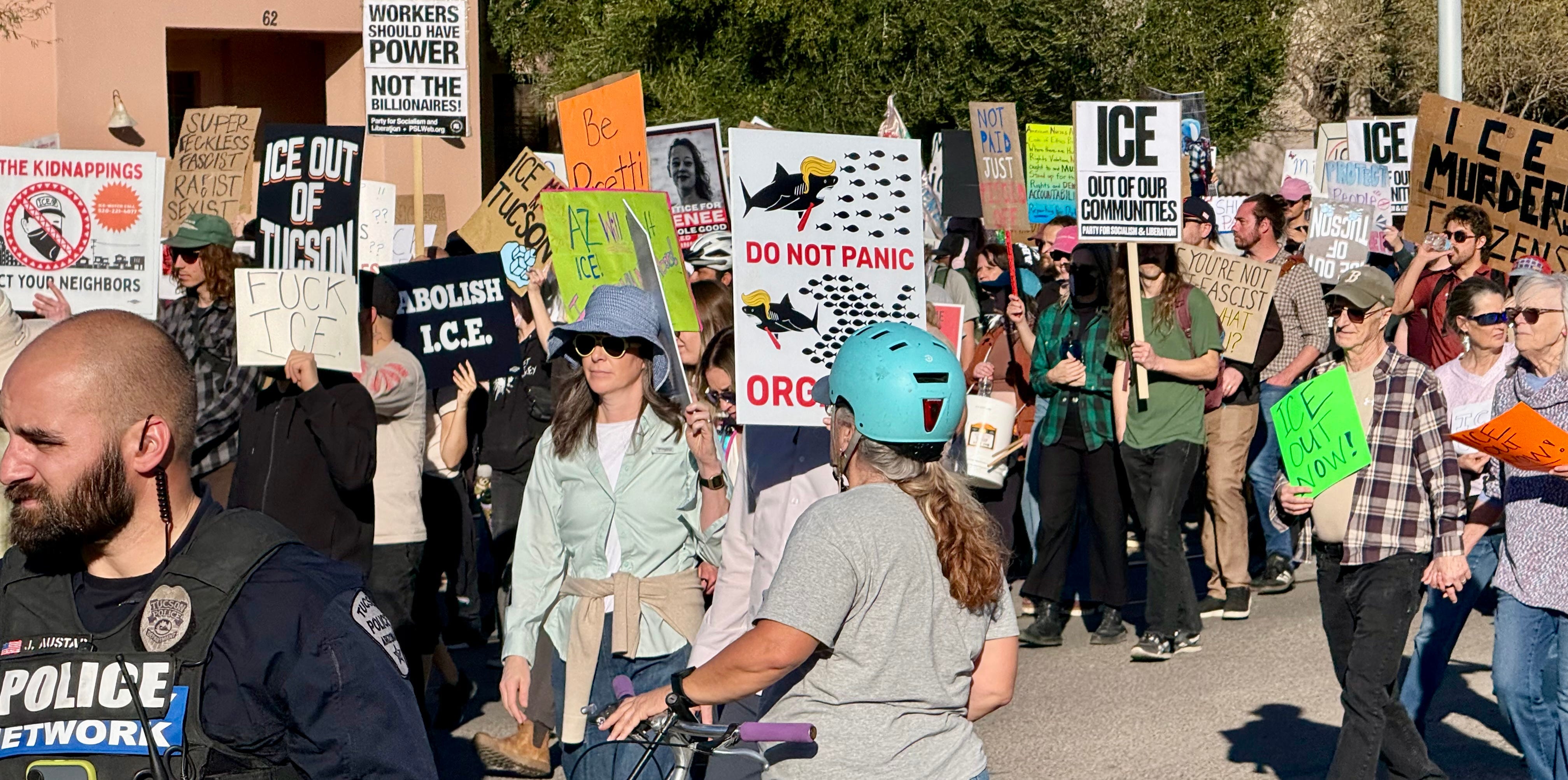
Never, though, does necessary change come through denying reality, turning away from need, or giving in to despair.
Sure, we need to grieve. But as Richard Rohr says, “If we do not transform our pain, we will most assuredly transmit it.” And one of the ways we transform our pain is by allowing it to motivate us into positive action in the hope that we can transform that pain for others too.
This isn’t about martyrdom. It’s not necessarily about self-sacrifice, though sometimes bravery does take that. This is about the courage to show up wherever we can, as fully as we can, and with as much compassion, empathy, and hope as possible. And in doing so, maybe our courage will become a contagion more powerful than the disease of injustice, and our hope will shine more brightly than whatever darkness we may see in the world.
This is why oppressive worldviews are so afraid of “wokeness.” Once we are awake to the unjust systems of the world, and once we wake up to our own power, our only choices are to either go back into denial or do our part to make a difference.
As Rumi wrote:
The breeze at dawn has secrets to tell you.
Don't go back to sleep.

You must ask for what you really want.
Don't go back to sleep.

People are going back and forth
across the doorsill
where the two worlds touch.

The door is round and open.
Don't go back to sleep.
I love you!
Eric